Log (rss)
04.01.2026 // Slow Living
Marrakech, Morocco ⬔
In the past few years, there's been a series of articles talking about how Gen-Z is embracing "slow living", i.e. making more time for hobbies and less hustling. Today, I read an excerpt from an essay by Carl Honoré in The Analog Sea Review (vol. 4) that shows that this is not a new phenomenon. Honoré cited debates from the Industrial Revolution about how "chopping up time into rigid blocks" can make life less humane. Emerging in the late 1700s, the Romantic movement opposed many elements of the modern culture of hustle. Going further back, even the Romans complained about having to get up at a precise time in the morning and the implementation of sundials.
- Marc
30.12.2025 // Independence and Backends
Rabat, Morocco ⬔
Something that has been on my mind lately is the challenge of self-hosting. AWS, Google Cloud, Azure, all of them force you into a set of proprietary tools that lock you in. There is also Supabase or Firebase that promise you "Platform-as-a-service". They provide a tightly-integrated, hard-to-extend set of tools that lock you into their ecosystem.
What fascinates me is that these PAAS solutions already existed some twenty-ish years ago, but had far less lock-in and relied on open source tooling. Some still exist today, for example there is Hetzner and Namecheap web hosting. They provide a managed Postgresql database, the ability to use any programming language you want via CGI, cron jobs and much more. They're all managed via open source tooling, so you can move away more easily if you want to.
But there is a trend that is quite clear now, which is that we are moving away from externally extensible systems towards locked-down "complete" systems, exemplified by the rising popularity of containers, SAAS and unikernels. Systems that are static, immutable, self-contained. I think it's sad, because IPC is a superpower, and there is some real power that comes with a malleable system that makes it easy for programs to interface. If you learn Unix, there are so many ways of stitching together programs quickly to do what you need. It gives you a lot of flexibility, and allows you to set up a workflow that more closely matches what your organization needs, all without needing to buy expensive subscriptions or learn vendor-specific tools. It is as if you learn a vocabulary, a programming language, rather than rigid "complete" systems you cannot control.
Yet, I think that unfortunately the Unix ecosystem has not entirely kept up. Partly because it is out of fashion; partly because people think they will out-scale a single server; partly I think there is a fear that self-hosting is insecure. Thus, there are a few pieces in the ecosystem that are missing if you want to build a decent web application. These are instead provided by expensive SAAS solutions, but they could just be a systemd service.
So, as a result, if you want a programming language agnostic solution to secret management, or authnz, or experimentation, then you're bound to expensive heavy SAAS solutions or heavy, hard-to-host, open source solutions. These solutions just tend to do too much, and as a result, tend to assume you use a combination of docker, react, jwts, github, and more; they also only provide integration paths for those tools. It means that adopting them tends to have cascading effects on all other decisions you do, and so in one way or another, you tend to be forced into using a software vendor or technology that you didn't want to use. You wanted the banana but got the gorilla in the jungle holding the banana.
Instead, what I'd like to see is a set of very primitives that do exactly the hard part and are easy to integrate with from any language. I have been very inspired by Plan9, which provides a uniform interface via files. These primitives do not need to scale to support large businesses, but instead be there for individuals who are skilled and want to quickly build an app that they can self-host, without needing any SAAS or PAAS or whatever.
My aspiration for the next year is to build support tools that make it easier for you to host your own webapp. For example, an authnz module for a modern web server like Caddy, or an experimentation client configured via Plan9 or Unix IPC style. They should use a uniform interface and be administered via files or sockets. Many open source tools today come with docker containers, their own set of auth, user management, admin UI and more. The primitives I want to build would instead try to be good Unix-citizens.
As a starter, I built a generic job queue named File d'attente. It is entirely managed using files. I guess it is philosophical, but I hate the idea of spending my time learning how to use third-party vendor specific tools and services. I want people to be able to learn transferable skills instead, a vocabulary.
- Marc
11.12.2025 // Ports of Refuge
Rabat, Morocco ⬔
Burrowed amidst criss-crossing tram lines, flat broad boulevards, narrow cobblestone streets—there is a little café-shop that always brings me a sense of peace in Rabat. When I walk in, everything hushes, and then the sounds, smells and sights gently pick up again.
Wandering recently between the shop's teas, spreads, shawls and postcards, a book caught my eye. Without much thought, I flipped open the thick hardcover and encountered humanoid birds, exuberant vines, patterned tiles, palm fronds, and other leaves. I was immediately enchanted by the drawings, watercolors and paintings of Abbès Saladi.
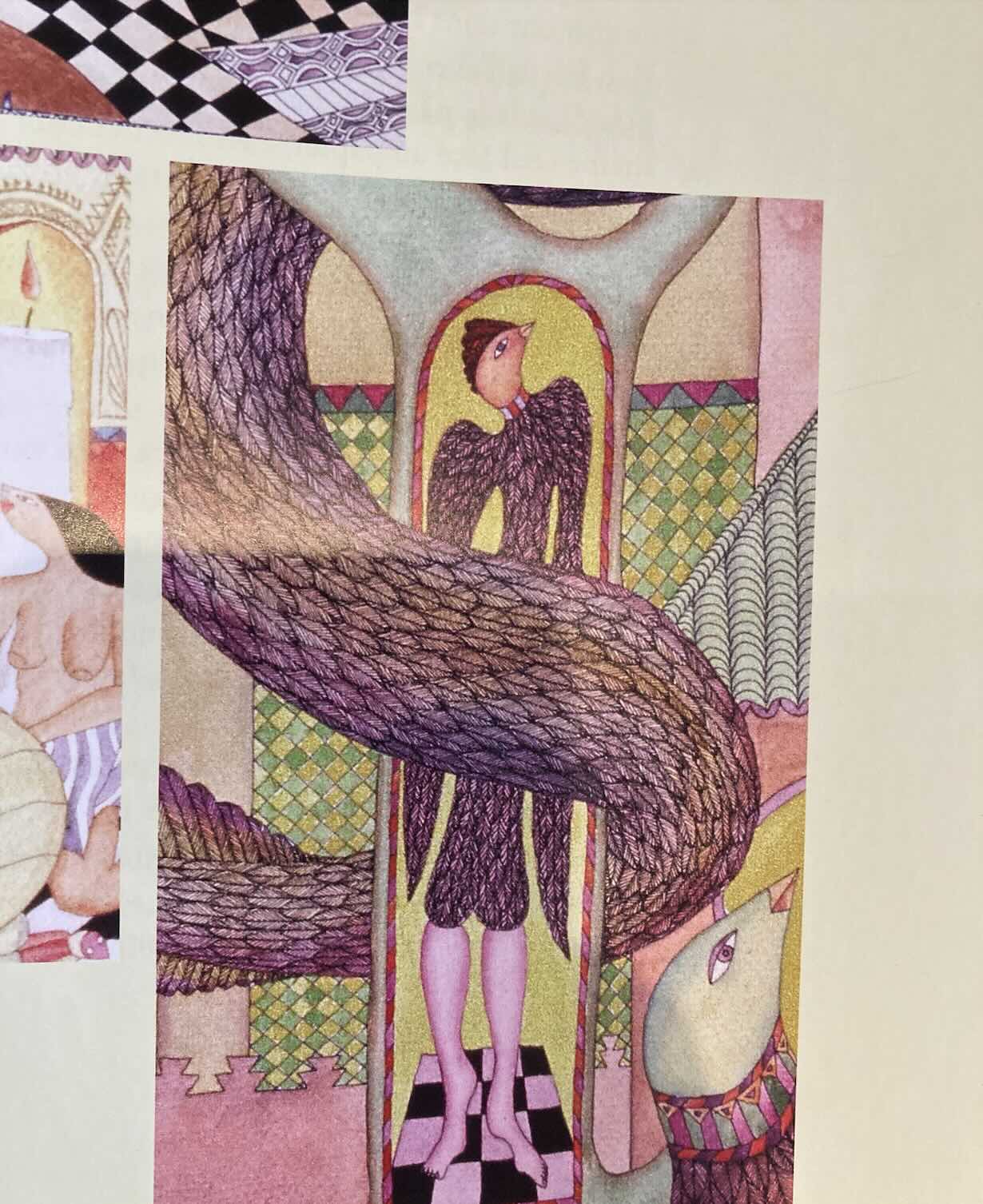
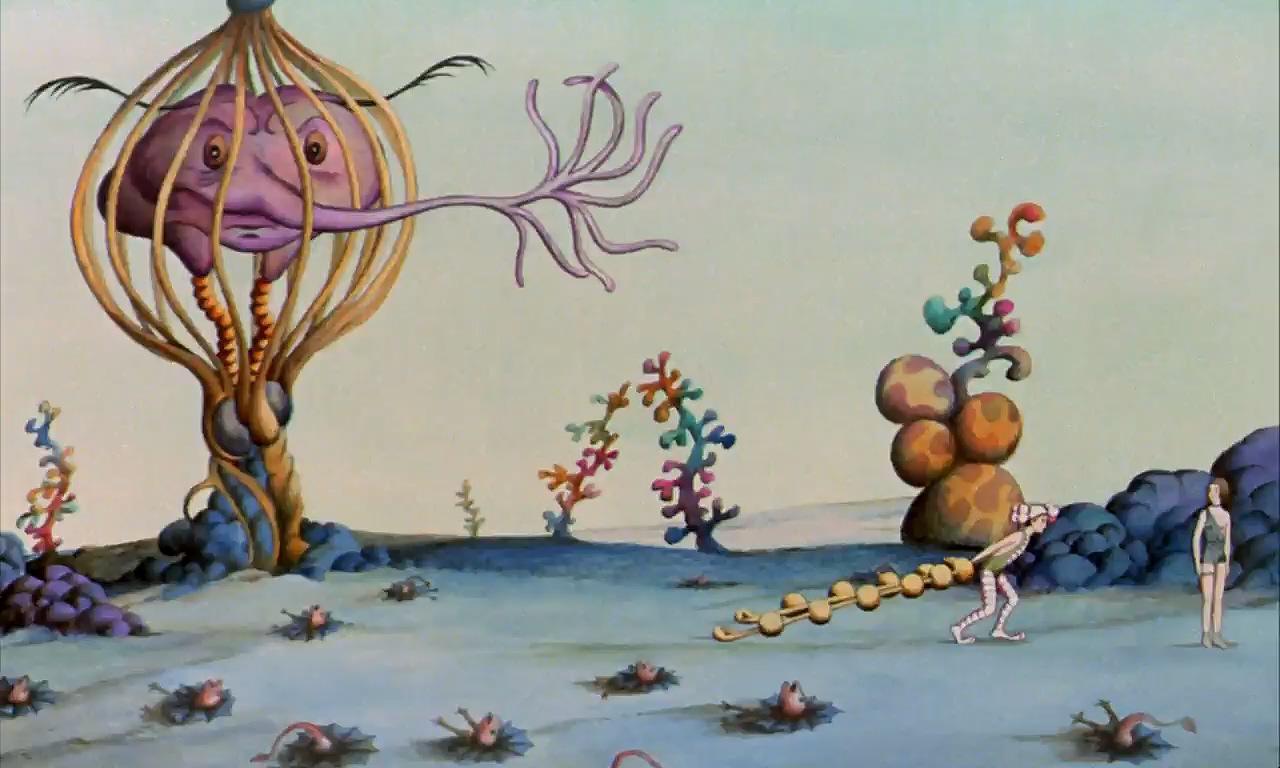
There is something about Saladi's work that makes me think of the film La planète sauvage. I could actually imagine an exhibition of Saladi's drawings set to the film's score composed by Alain Goraguer.
Browsing online, I discover that there is very little information available about the artist (perhaps there is more out there in Darija). Much of his work is in private collections and auction houses. I decide that I will gather a few facts from the book in the shop and create a Wikipedia article (one day, hopefully). In fact, if I had a library of my own, I would have bought the book about Saladi's art right then and there.
These sort of encounters remind me why I set out to travel in the first place. And there have been so many of them so far. It feels as if only moments ago I was admiring Gerard Sekoto's yellow houses in Cape Town and now I am admiring Saladi's sinuous bird people at the other end of the continent. These encounters have only multiplied as I have learned to seek them out. But perhaps what I need now more than anything is time to sit with all of these paintings, poems, essays, films, bits and pieces of art.
- Andrea
27.11.2025 // An Anthology of Brazilian Literature
Rabat, Morocco ⬔
Between October and November, I have read a couple of really great books and I have been meaning to write about them, but I think I will give up on the monthly review structure. I should really just write about a book when I am excited to do so, otherwise it becomes a bit of a chore. There are also some books that take a while to digest, like Albert Camus' The Myth of Sisyphus, which in many ways I am always writing about nowadays.
Something that is a bit easier to put on paper is a list of the wonderful stories that I encountered in an old anthology of Brazilian literature. I already dedicated one entry to a Machado de Assis story that really delighted me. I also mentioned Rubem Braga at some point. Now, here is the full list of the stories and authors that have stayed with me long after completing the whole book:
- "Um apólogo" de Machado de Assis
- "Festa" de Graciliano Ramos
- "História do Carnaval" de Jorge Amado
- "As mãos de meu filho" de Érico Veríssimo
- "Circo de coelhinhos" de Marques Rebêlo
- "Brinquedos incendiados" de Cecília Meireles
- "Gato, gato, gato" de Otto Lara Resende
- "Céu limpo" de Eduardo Campos
- "A aranha" de Orígenes Lessa
- "Uma vela para Dario" de Dalton Trevisan
And as a bonus...
Some other September + October Reads
- "Charulata: 'Calm Without, Fire Within'" by Philip Kemp
- "Patricia Lockwood Goes Viral" by Alexandra Schwartz
- "Highjump as Afrofuturism" by Gustav Parker Hibbett
- "Reading the Greeks Under a Blanket of Blue" by William Coleman
- "Fallen Fruit" by Don Mattera
- "When the Montuno Hits in Hong Kong: My Journey into Canton Mambo" by Gia Fu
- Andrea
13.11.2025 // Writing in Rabat
Rabat, Morocco ⬔
In Rabat, walls and rooms crumble into sea foam and towers rise on riverbanks. Cats always prowl just around the corner and in the shadowy depths of a worn and tattered grey building, I see a fire burning bright. Every morning, it spits out sweet cakes, hard breads, and cookies onto the sidewalk, to the delight of passer-by's. In Rabat, it rains plastic on the dirty blonde beaches and blue taxis race down perfectly palm-lined avenues. It has taken me a while to figure out how to write here. In the narrow, damp and dusty, streets of the medina, I am reminded of the smell of my great-grandmother's brick house in Bogotá. But once out among the merchants and the motorbikes, my ability to decipher what is before me recedes gently like the sea.
- Andrea
10.11.2025 // Aeolipile
Rabat, Morocco ⬔
I just came across the first recorded steam engine, the Aeolipile, also known as Heron's engine. It seems like it might not have been used for anything practical at the time.
It blows my mind to imagine that such a device existed so far back. In some sense, it represents to me "what could have been". Like, in an alternative past, what would the world look like had we explored this device's capacities further at the time? Yet, we did not, and it would take another 1500 years until the idea reappeared once more.
I wonder what inventions or ideas today may prove to be similar to the Aeolipile.

- Marc
25.10.2025 // A Protea is Not a Flower
Cape Town, South Africa ⬔
Last weekend, Marc and I visited the Zeitz Museum of Contemporary Art Africa (MOCAA) to view two new expositions that have opened up during the spring. The Zeitz is an impressive towering structure, a museum housed in an old industrial silo by the harbor. Every time I visit the museum, I am reminded of the special beauty that can be found within a repurposed space, and of all that there is to learn and experience within the museum's thick concrete walls.
This final visit was particularly meaningful, not just because our time in South Africa is drawing to a close, but also because I encountered the paintings of Gerard Sekoto and the poetry of Don Mattera for the very first time. Named after one of Mattera's poems, the exhibition "A Protea is Not a Flower" puts a spotlight on South African modernism and exile brought on by apartheid in the 20th century. In fact, Sekoto and Mattera are prominent names within South African art history, and I feel grateful that I will not leave Cape Town without experiencing their work.
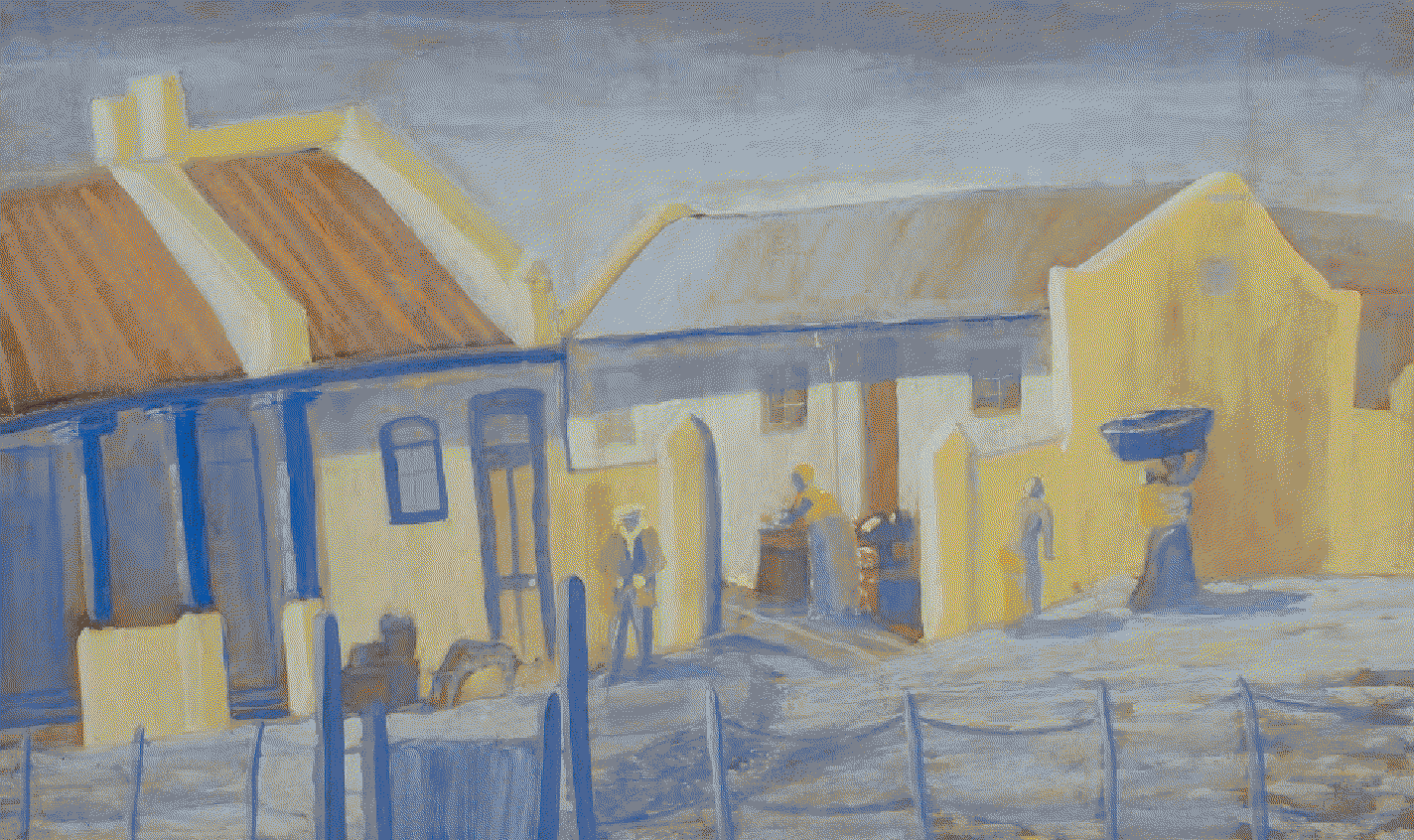
Seeing paintings like "Yellow Houses in Sophiatown" and reading poems like "Fallen Fruit" elicited feelings not unlike those that I have felt when seeing the films of Satyajit Ray and Wong Kar Wai for the first time. Or when I stood on a beach of black sand for the first time. Like a first taste of pistachio gelato, a first reading of Jane Eyre. Awakenings that pull at the heart.
- Andrea
19.10.2025 // What is Art?
Cape Town, South Africa ⬔
Lately, I have been thinking that, while good art often uncovers what is hidden, allowing us to see lucidly across large spans of time and space, the short-form clips of our age seem to instead obscure our sight.
Take, for instance, the "tradwife" trend on TikTok and Instagram. There is perhaps no more powerful antidote to the digital mirage of seemingly young, healthy, and manicured women endlessly showing off pampered babies and sponsored cleaning products, than the short story collection I recently finished reading. In Banu Mushtaq's Heart Lamp, a young housewife cries out to her husband (and to us all): "Others are not even married at my age. But I am already an old woman [...] My back is broken. These children, the home, samsara—do I have even a minute of free time? If I bear one child per year, what will I become? Don't you want me to live long enough to be a mother to these children at least?"
- Andrea
01.10.2025 // Helen's Exile
Cape Town, South Africa ⬔
After an early start to the day and to the month of October, we sat down with one of the essays of Albert Camus, "Helen's Exile". It proved to be especially lovely, melancholic and thought-provoking on a grey rainy day like today, and Camus' literary flair is always awe-inspiring. We picked out a few of our favourite quotes, some of which can make confronting current events feel less lonely, and some of which speak to some of the other reflections posted on Comma Directory recently.
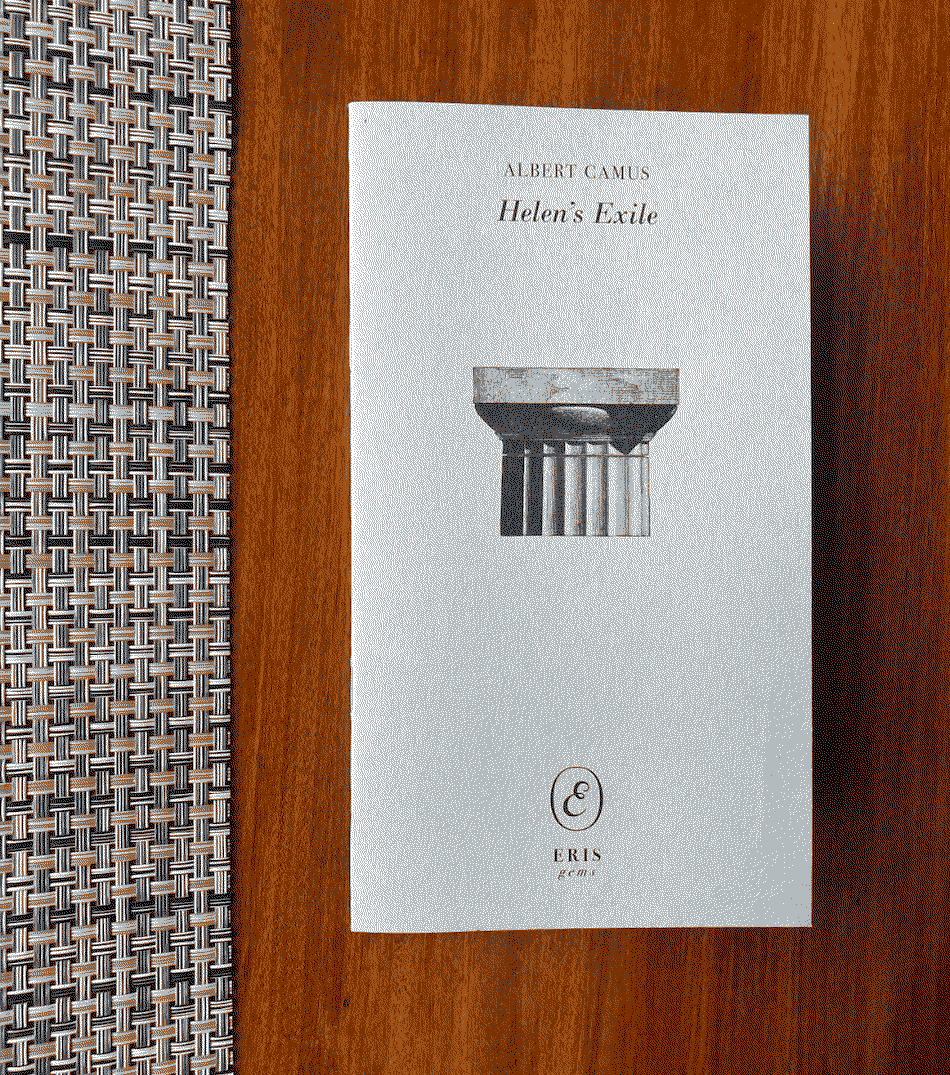
"Our Europe [...] off in the pursuit of totality is the child of disproportion."
"In her madness she extends the eternal limits, and at that very moment dark Erinyes fall upon her and tear her to pieces. Nemesis, the goddess of measure and not of revenge, keeps watch. All those who overstep the limit are pitilessly punished by her."
"In a drunken sky we light up the suns we want. But nonetheless the boundaries exist, and we know it."
"In our wildest aberrations we dream of an equilibrium we have left behind, which we naively expect to find at the end of our errors."
"We, too, have conquered, moved boundaries, mastered heaven and earth. Our reason has driven all away. Alone at last, we end up by ruling over a desert."
"Whereas the Greeks gave to will the boundaries of reason, we have come to put the will's impulse in the very centre of reason, which has, as a result, become deadly."
"Nature is still there, however. She contrasts her calm skies and her reasons with the madness of men. Until the atom too catches fire and history ends in the triumph of reason and the agony of the species."
"But the Greeks never said that the limit could not be overstepped. They said it existed and that whoever dared to exceed it was mercilessly struck down. Nothing in present history can contradict them."
"The historical spirit and the artist both want to remake the world. But the artist, through an obligation of his nature, knows his limits, which the historical spirit fails to recognise. This is why the latter's aim is tyranny whereas the former's passion is freedom."
"[Our era] wants to transfigure the world before having exhausted it, to set it to rights before having understood it."
"Whatever it may say, our era is deserting this world."
"Yet what a temptation, at certain moments, to turn one's back on this bleak, fleshless world! But this time is ours, and we cannot live hating ourselves."
"Admission of ignorance, rejection of fanaticism, the limits of the world and of man, the beloved face, and finally beauty—this is where we shall be on the side of the Greeks."
- Andrea & Marc
24.09.2025 // Echoes
Cape Town, South Africa ⬔
One of the benefits of reading widely and constantly is that the opportunities for enlightening coincidences multiply. A line from Rubem Braga's "O Motorista 8-100" suddenly echoes with the writing of Camus. I listen to a lecture on Jane Austen's personal letters and think of Banu Mushtaq's short stories. I write about an encounter with a dying bird on the sidewalk, I read Caetano W. Galindo's Lia and encounter a scene in which the protagonist, Lia, encounters a dead bird on the sidewalk. Nothing is original, but everything is. This does not discourage me. Ideas repeat, but never exactly in the same way. It testifies to the common experiences that bind living beings together, and it also speaks to individualities that are irreplaceable.
- Andrea