Log (rss)
10.09.2025 // Summer-Winter Reads: June, July, and August
Cape Town, South Africa ⬔
I have read and written less than I would have liked during the past three months. Not too unexpected, however, as it has been the part of the year in which I have traveled the most. After a month in Cape Town, I feel like I have some room for pause and reflection on the books that have accompanied me from Bath and London to the United States and now South Africa.
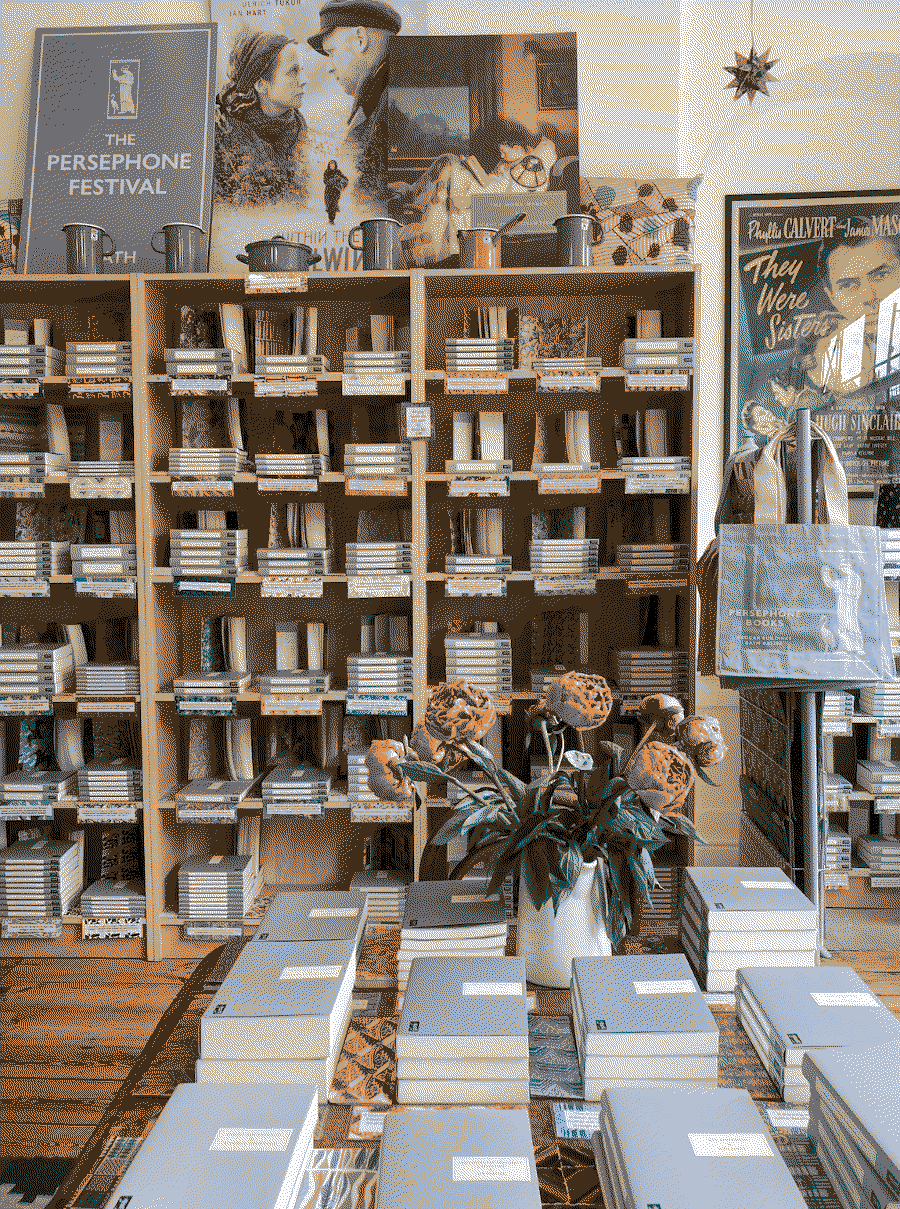
I realize now that my reading has been just as scattered as my physical presence: from a radio journalist's compilation of tales about the lives of Chinese women in the 80s and 90s to contemporary queer Latin American poetry and an academic analysis of the cultural impact of Ayn Rand. It has been interesting. So much so, that I do not really know where to begin.
Perhaps, I should begin at the beginning. And an important beginning for me is Jane Austen. Bidding adieu to Bath, I re-read Pride and Prejudice during my last few days in the UK. It happened spontaneously, or as spontaneous as it can be when at every corner I was reminded that it was the 250th anniversary of Austen's birth. Bath practically burst with Austen, and I eyed it all a bit skeptically. Maybe with a similar skepticism to that with which I approached Pride and Prejudice for the first time when I was in high school. However, Austen's eternally fresh and funny storytelling always manages to sweep away my reserve. With each re-reading, my appreciation only grows and I was pleased to have had the novel's company during the long hot nights of a London heatwave.
Some of my other reads this summer were less comforting, matching the anxious tone of the times, of degradation in all sense of the word. Mean Girl: Ayn Rand and the Culture of Greed by Lisa Duggan and The Good Women of China: Hidden Voices by Xinran are two non-fiction books that prompt reflection on how societies function and malfunction, and how this malfunctioning can profoundly hurt individuals, families, and communities. What ideas get to be influential and why? How do we displace harmful ideas and conventions?
The pessimism and anxiety that comes from ruminating on the world's biggest issues, some that perhaps seem unsurmountable, is one of the main themes of the other book that accompanied me on flights and train rides: A System So Magnificent It Is Blinding by Amanda Svensson. This big novel is full of quirky moving pieces, like a Murakami novel, but very Swedish and with less music. Faraway places, improbable images, coincidences that promise to be part of some big conspiracy. The three sibling protagonists try to make sense of a world that feels like it is going to pieces. In the end, I felt like this novel was an exercise in building suspense and anticipation only to purposefully disappoint in order to make a point. I appreciated the concept and the intent more than the novel itself, unfortunately. Not sure I would pick it up again, but I am glad to have read it.
In the midst of all of that, I stumbled into some poetry as well. Feeling a bit nostalgic for home, I picked up an anthology of queer Latin American poetry edited by the Argentine poet Leo Boix, as well as a newly published work by Boix. Within Hemisferio Cuir: An Anthology of Young Queer Latin American Poetry, I was pleased to discover poetry from across the region, including some countries that are less well represented on the global literary stage. These are the poems from the collection that stuck with me:
- "El agua de los sueños" de Flor Bárcenas Feria
- "Oda a Querelle de Brest" de Pablo Jofré
- "Una parra sube" de Paula Galíndez
- "Poetas enamoradas" de V. Andino Díaz
- "Cómo ser feliz siendo de Nicaragua" de Magaly Castillo
- "poema [post]umo" de Alejandra Rosa-Morales
- Andrea
26.08.2025 // Data Pods
Cape Town, South Africa ⬔
Traditionally, web applications have stored user data on their own servers, and thus, the server owners bear full responsibility for and ownership of that data. They can analyze it, sell it and manipulate it how they wish (which includes destroying it). Now, what if we flipped the script and instead of web applications storing user data on their servers, they needed user permission to read data users own? The user would then have full ownership of that data, and could inspect, remove and change ownership and access as they wish. Applications would also store the data on the users' servers instead of their own.
This is the idea behind the SOLID project, in which users would own what they call data pods. In other words, users would store semantic data in a pod and grant applications access to read from that pod. That way we can move away from companies like Meta storing and keeping so much information about us. SOLID is not the only company exploring this concept. AT Protocol, developed by Bluesky, does something very similar. Users can store their tweets on Bluesky's server, or host their own PDS, or personal data server, retaining ownership of their data on the pod.
ICloud arguably can also function as a data pod. It enables apps to store data directly to the user account instead of a server, enabling the seamless synchronization that comes with having data stored on a server.
Lately, I have also explored Caldav servers, which share some characteristics with a datapod. What I like about it though is that everyone is already signed up to some sort of email provider, and with that they most likely also have a calendar, which typically uses Caldav as the backend. Caldav uses the iCalendar media-type, and it is surprisingly flexible; it supports events, to-dos and even journals. There is therefore a lot of potential for interoperable social productivity tools and note-writing tools that hasn't really been explored.
- Marc
21.08.2025 // The Cape of Good Hope
Cape Town, South Africa ⬔
The white "tablecloth", fluffy and wispy, has draped itself over the grey rocky peaks around which this city has carved its roads, villas, shacks, churches and mosques. The sun shines down on the thick frondy palms that peek above the white walls of Dutch-style colonial structures and Art Deco-inspired apartment blocks. Greens, reds, and whites are what I can see from the window I have borrowed.
How have I made it here? So far from home, to such a beautifully rugged place which, just like home, is bursting at the seams with life and death, cruelty and kindness, opportunity and injustice.
Effervescent have been the first three weeks I have spent on the African continent. Cape Town is everything Marc has described to me over the years, yearning to return. To the sea, the mountains, the trees, the languages, the cultures, the art. It is like being a child again. The bird is not quite a bird as I have known it. It sings songs up to now unknown to me as the day rises and the call to prayer rings from a nearby mosque.
I am grateful, but do not know what to thank beyond those who have cared for me up to now. Am I deserving, worthy of being fortunate? It is a pathetic question, isn't it? In Cape Town, like in Bogotá, the face of the mountain itself appears stained by the pervasive shadow of violence and inequity. Cities like ours demand you pay attention. You are not allowed to avert your gaze.
Earlier this summer-winter, when I was in New York City, a friend told me she wanted to stop feeling guilty for living. To live. I have wanted so much to be able to live without fear. To move freely. To learn everything I possible can. To take care of others. Have I now traded fear for guilt? And what good does guilt do?
- Andrea
15.08.2025 // Unearthing Gems
Cape Town, South Africa ⬔
While practising my Portuguese and going through an anthology of Brazilian literature a good friend gifted me many months ago, I discovered a three-page short story that dazzled me. Up until this point, I had read through the other excerpts and stories with a studious sort of interest, discovering new authors and literary styles. But encountering Machado de Assis' Um apólogo blew me away and made me think that the classics are the classics for a reason. Yes, lots of great art gets left out of "the canon," especially that of marginalized groups. I believe there are many more "classics" out there than those regularly taught in classrooms. Nonetheless, I understand why Machado is considered one of Brazil's greatest writers. It is not unmerited.
I wish I could write first lines as good as these:
"Era uma vez uma agulha que disse a um novêlo de linha: —Por que está você con êsse ar, tôda cheia de si, tôda enrolada, para fingir que vale alguma coisa neste mundo?"
To write a very good story about the rivalry between a sewing needle and a ball of thread is impressive. Machado adopts the conventions of the fable, even including a little lesson or moral at the end, but the story goes beyond the traditional fable and takes on an almost existential or absurd sense.
There have been times that as I writer I have wondered if what I am writing about is too silly or random. Machado's amazing little story about a humanized sewing kit is a necessary reminder that the skill and imagination of a writer can make any subject enthralling and thought-provoking.
Now, I really want to read Machado's Memórias Póstumas de Bras Cubas, which has been languishing in my mental "to-read" list for at least a decade.
- Andrea
10.08.2025 // Back to the Basics with Short Film
Cape Town, South Africa ⬔
During my recent trip to New York City, a friend invited me to the IFC Center to watch this year's Sundance Shorts Tour. This screening is the latest in a series of unexpected encounters with short film that have popped up throughout my travels in the past year. Wherever I go, it seems like there is some sort of short film festival or screening going on. I have also begun to cross paths with aspiring and emerging directors, and it has been fascinating to gain some insight on the current challenges and opportunities within the discipline. In a way, it is all very fitting. When I first began to wade into the world of film nearly ten years ago, my point of entry was a short film: Chris Marker's La jetée, which has haunted me ever since.
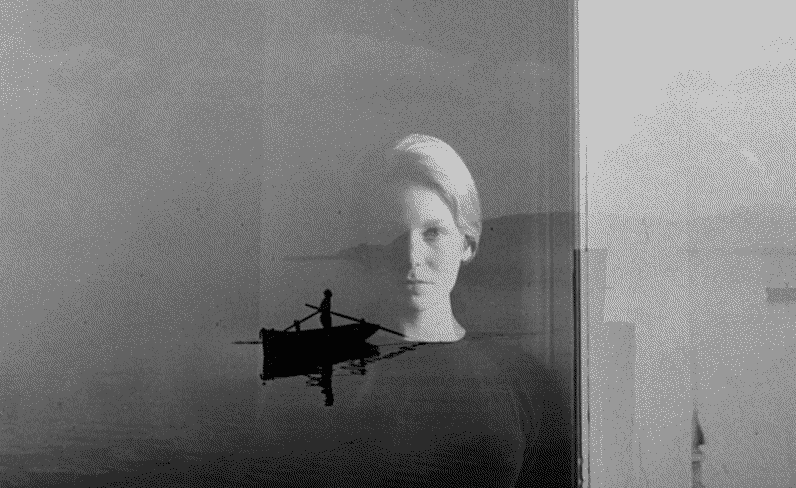
I want to reflect on this yearlong impromptu journey into short film by featuring some of my personal highlights and what has made these films so memorable.
Bright Lights (2019) by Charby Ibrahim
A short documentary film on gambling and addiction, animated in the bright flashing lights of slot machines, that communicates the despairing ease with which compulsion takes over the human brain. The white outlined figures on the black background are eery; the animation manages to convey the way in which addiction can hollow out a life. It is a film I find myself coming back to, and that I think about a lot in relation to the rise of design elements in games and social media that draw inspiration from casinos.
Bogotá Story (2023) by Esteban Pedraza
I stumbled upon this short fiction film by chance and it turned out to be one of the most meaningful encounters I had with an artwork in 2024. It brings the Bogotá of the 90s back to life with an attention to detail that is astounding. It almost felt like the visual quality of the film mirrored that of my own childhood memories: from the color palette of greens, brick oranges, and blues to a dark shadowy quality of a city often overcast. Not only am I not used to seeing my hometown depicted on film, but seeing it reconstructed with so much care was touching. This care contrasts in a powerful way with the violence that simmers just below the surface throughout most of the film, foreshadowing tragedy.
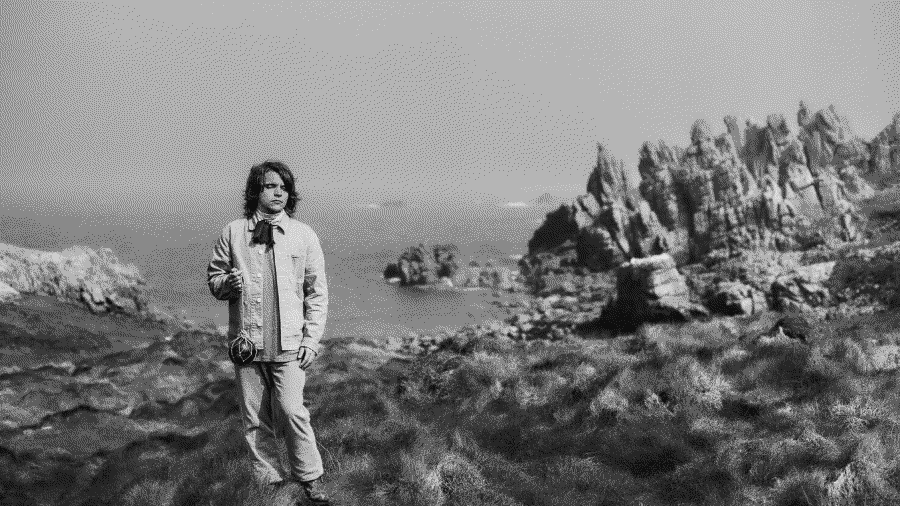
De Blinden (2023) by Michiel Robberecht (International Short Film Festival of Cyprus)
When I saw this odd fictional short in the Rialto in Limassol, I did not know what to make of it. A town full of blind inhabitants, a temporal setting that could be the past or some sort of future, a mysterious threat that may or may not exist. It was very different from all the other films screened that day at the festival. Shot in black and white, there is a compelling play of shadow and light that gives the film a mythical feeling. Ultimately, De Blinden made me think of Ingmar Bergman's The Seventh Seal and David Bowie's last album, ★ (Blackstar), which are not uninteresting evocations.
We Were The Scenery (2025) by Christopher Radcliff (Sundance Shorts Tour at the IFC Center)
I must make a somewhat embarrassing confession now: I have never watched Apocalypse Now. It is one of those classics that I have not gotten around to watching, but that I have been wanting to. I mention it now because We Were The Scenery is a mini documentary of the Vietnamese refugees that were casted as extras in the film. Apparently, Coppola's film crew arrived at a refugee camp in the Philippines and swept everyone up to be part of the film. We Were The Scenery is the testimony of one couple, Hoa Thi Le and Hue Nguyen Che, and their difficult relationship with Apocalypse Now and the war-torn past that haunts them. Even now, I remember the feeling of sitting in the theater and realizing how messed up it was to have victims of war recreate the very same war that they were running away from. It was a strong commentary on filmmaking through the lens of another filmmaker. In a way, I am glad I got to see Hoa Thi Le and Hue Nguyen Che's version of the story first, of what it truly meant to survive the Vietnam War.
Hurikán (2024) by Jan Saska (Sundance Shorts Tour at the IFC Center)
I will close out my list with another animated short, Hurikán. Having lived through a few hurricanes, I believe this film is aptly named. The pacing of the animation is great in the way it alternates between moments of suspense and anticipation with high energy impact scenes that tear through Prague. The effect was also perhaps heightened by the fact that it followed right after We Were The Scenery and I was still a bit teary eyed when the pig headed protagonist burst into the scene. I really enjoyed how the film played with the slapstick conventions of cartoon, while still managing to transcend those conventions.
Other Short Films Watched
- Susana (2025) by Gerardo Coello Escalante and Amandine Thomas
- Grandma Nai Who Played Favorites (2025) by Chheangkea
- Les talons de ma mère (2025) by Lili Cazals
- Percebes (2024) by Laura Gonçalves and Alexandra Ramires
- La Cascada (2024) by Pablo Delgado
- Minha Mãe é Uma Vaca (2024) by Moara Passoni
- Grave (2023) by Martin Tunnicliffe-Squirrell
- Love Is Blind (2018) by Dan Hodgson
- L'homme qui plantait des arbres (1987) by Frédéric Back
- Junkopia (1981) by Chris Marker
- Whiplash (2013) by Damien Chazelle
- Andrea
24.07.2025 // Thinking of Stonehenge in Manhattan
New York City, United States ⬔
The past four weeks have taken me from Bath to London to New York, New Jersey, and Pennsylvania—leaving me with just enough time to catch my breath. Amidst the hustle and bustle, I had a few parting thoughts that have stuck with me about a small day trip we did in England, thoughts which are broadly pertinent to travel and living generally.
Shortly before leaving the UK, we went to Stonehenge and it brought me back to a younger self who was just beginning to discover the world. Up to the very day we went, I had doubts about whether to make the trip over. It is a busy time as we approached the end of our visit to Bath. Lots of travel awaited, and as travel accumulates in my past and future, I begin to enjoy static moments more and more.
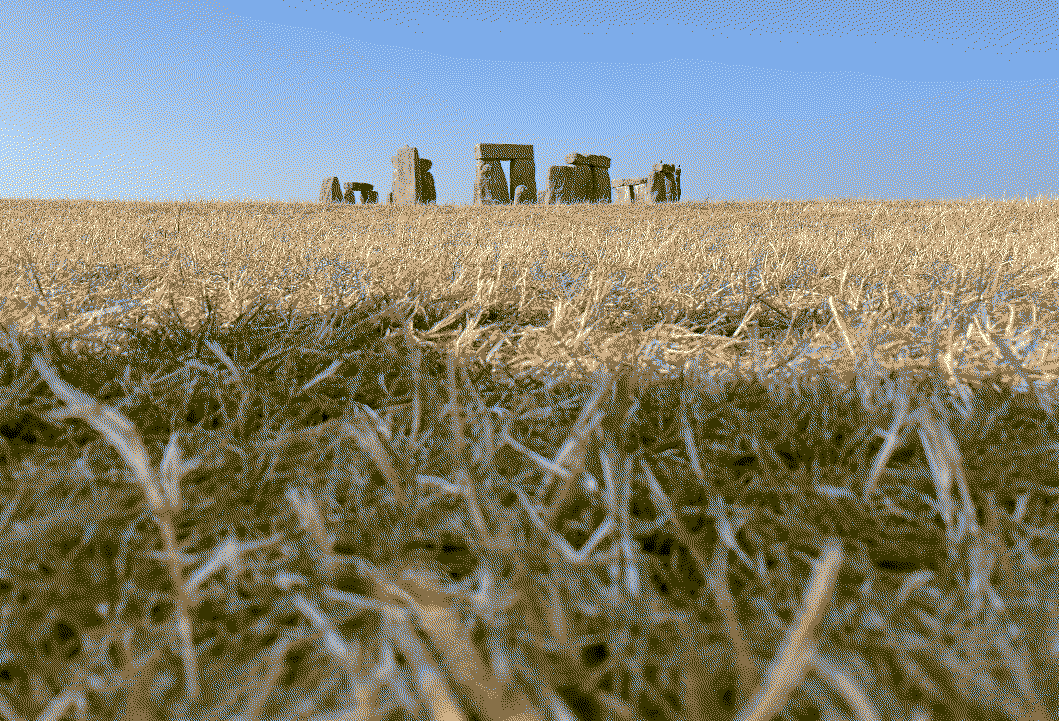
Nonetheless, the clutter of logistics, work, and everyday tasks can also cloud vision. In the end, how could I not go? The site was less than two hours away and there are no guarantees I will ever have the chance to see it again. The awareness of a present both fleeting and latent with possibility is something that has always characterized my outlook on life. And yet, there are so many forces in our every day that increasingly try to obscure the value of experiencing, living, contemplating. Deciding to go to Stonehenge was a reassertion that each day and each minute is not to be taken for granted.
Beyond the inertia of banality, there is also cynicism: why go? Isn't it just an overhyped commercialized sort of place? These are the whispers and judgements that try to chip away at the value of something because it is too popular, too well-known. I know that my younger self was almost deaf to this type of cynicism. After being denied mobility and possibility for so long, the inherent of value of discovering and exploring and learning and experiencing seemed too obvious. It is this instinct that has driven me to go rogue on trip itineraries, like that time I refused to leave Istanbul without visiting the Hagia Sophia and the Blue Mosque. Today, I am proud that at sixteen I had the foresight to do that; I haven't been back to Istanbul since.
In Walker Percy's "Loss of Creature", the author reflects on how modern institutions, such as school or mass tourism, and the expectations we develop as a result of being embedded in them, alienate us from that which we wish to encounter and access. Percy toys with ideas on how to reclaim experience, eluding cliché, disappointment, and cynicism. Growing up, the inherent value of experiences revealed itself to me as an obvious contrast to the relative scarcity, constraint, and struggle I had had to live through. As my access to the world has swelled, have I lost sight of this?
The special feeling that still springs within, whether at the foot of Stonehenge or on the crisscrossing streets of Manhattan, makes me think not. I still feel like the luckiest person in the world, just like when I saw the rising domes of the mosques in Istanbul or the black sand volcanic beaches of Guadeloupe—-the drive to live is still there, even if I have to make a greater effort to tear down some of the pressures and expectations that adult life has brought with it.
- Andrea
03.07.2025 // Imposing Software
London, England ⬔
I have written before about the importance of software that is portable. One great quality of such software is that it avoids being imposing. The ideal software should allow us to use whatever stack of software we want without forcing a bunch of unwanted dependencies onto us, otherwise it becomes what I want to coin as imposing software.
An example of imposing software would be a bank authenticator that is limited to only a small set of platforms. A more insidious example of such software would be collaborative software or software where, because others use it, you must use it too. This can be Google Docs, which in order to collaborate with others forces you to use a web browser, which in turn forces you to use a specific set of software and hardware, which in turn can make your hardware obsolete. Another example is iMessage, which in a group where not everyone uses iPhone, converts the group chat into a downgraded experience where images are of lower quality. Android users in such a group chat are shamed with green message bubbles.
- Marc
22.06.2025 // On Days Like These
Bath, England ⬔
On days like these, when the caprice of a handful of men threatens to extinguish all life and all joy, I can only hope for lucid, human encounters like the one I had today, in a corner of an art gallery, with a print from Francisco Goya's series Los desastres de la guerra [The Disasters of War].
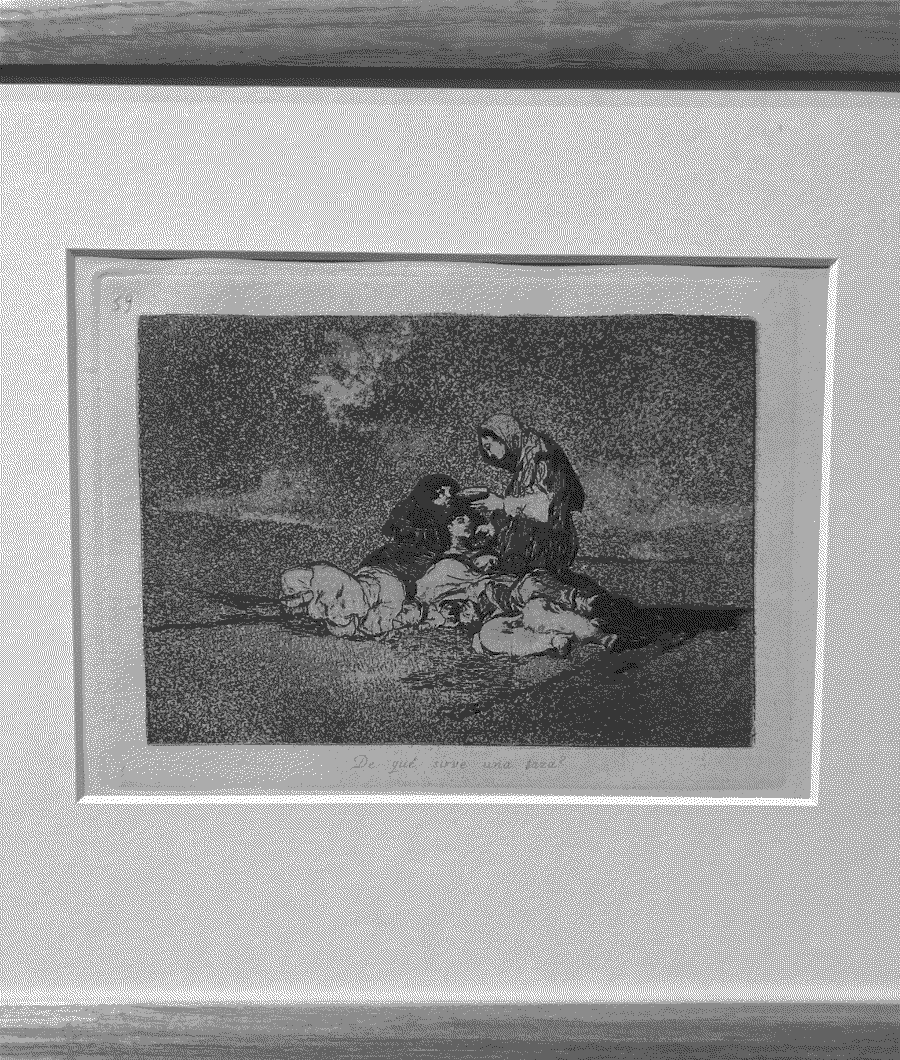
A reminder that we have no need for more Napoleons in this world, a desperate wail etched into metal and paper, an admonition for all the lives needlessly lost to "caprichos enfáticos" ["emphatic caprices"], as Goya called it, and a testament to a shared sense of horror in the face of a relentless unleashing of war and violence that spans centuries. Goya's prints are as necessary and vital now as they were when he first crafted them as a witness.
- Andrea
P.S. The gallery's description of this piece mentions the deadly famine that Goya depicted in this print. However, it fails to mention that the famine was the result of the French army's siege on Madrid.
20.06.2025 // Filesystems are Composable Interfaces
Bath, England ⬔
As a programmer, I have had numerous epiphanies that seem so obvious in hindsight. One such realisation came as I was exploring user-space file systems. Any system that exposes simple file formats allows for a large variety of preexisting programs to interface with it. If you expose your data as CSVs then Excel, Google Sheets, Numbers, and Libreoffice are able to open and make all kinds of modifications, calculations, etc.
Arriving at this basic premise doesn't require too much effort, but what is less explored and, perhaps, less obvious is that it is possible expose different "views" of data so that different programs can understand and interact with the data. I've been investigating this with my new program caldavfs (still WIP). I started writing caldavfs because I wanted a way to sync my custom notes between different devices and be able to view and open these notes easily on my phone. Since iCalendar supports VJOURNAL, I thought it'd be cool to expose files that I can write in my regular text editor, and have those be saved afterward as VJOURNAL files that I sync with my caldav server.
Typically an iCalendar file has the following format:
  BEGIN:VJOURNAL
  UID:19970901T130000Z-123405@host.com
  DTSTAMP:19970901T1300Z
  DTSTART;VALUE=DATE:19970317
  SUMMARY:Staff meeting minutes
  DESCRIPTION:1. Staff meeting: Participants include Joe\, Lisa
    and Bob. Aurora project plans were reviewed. There is currently
    no budget reserves for this project. Lisa will escalate to
    management. Next meeting on Tuesday.\n
    2. Telephone Conference: ABC Corp. sales representative called
    to discuss new printer. Promised to get us a demo by Friday.\n
    3. Henry Miller (Handsoff Insurance): Car was totaled by tree.
    Is looking into a loaner car. 654-2323 (tel).
  END:VJOURNAL
And so what caldavfs essentially does is take those files and build a view of them that is easier to edit and write, allowing you to use your tool of choice when engaging with the files.
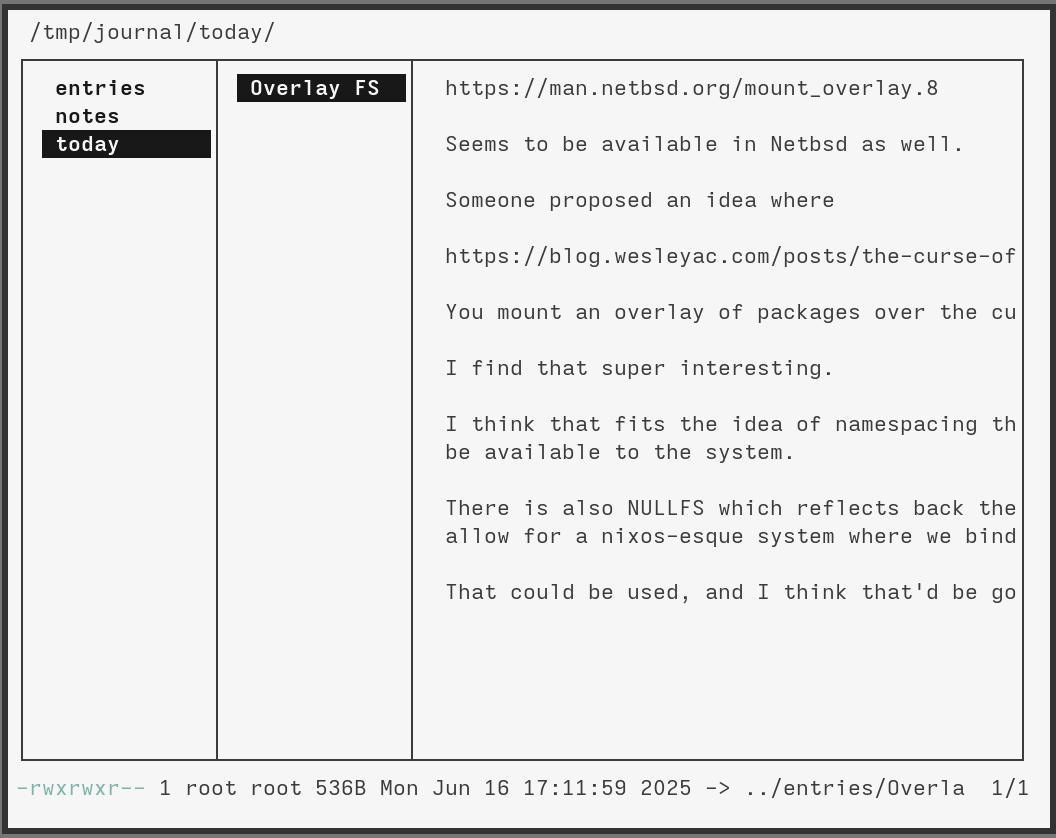
What I realize, then, is that files are essentially a protocol, almost like REST, that expose an interface that contains methods, such as: read, write, stat, readdir, etc. Applications that work with files call those methods to perform operations. This is very similar to a message-passing system with late-binding similar to Smalltalk. While drafting out this entry, I did a quick search and found that, naturally, I am not the first one to have made this observation.
The paper also highlights another challenge that I perceived: when you try to fit a file-like interface everywhere, cases arise where the abstraction breaks and become confusing. For example, what does it mean to cp -r a process tree? Does it create a snapshot? What operations are supported?
It's a challenge I faced with caldavfs. It works great as I am able to create notes using any editor I want, and I can use rm, cp etc., to make modifications. At the same time, files do not necessarily map cleanly onto iCalendar format. For example: directories don't exist in ical, summaries are not unique but file names are. Then, there are a lot of cool features that are tougher to represent with files: note linking, categories, event types, etc. How should those be represented? It is not obvious.
This seems to be the Achilles' heel of composable systems, these abstractions become loose and open to interpretation. Files are great, but maybe not the best foundation. Maybe abstractions from Functional programming would be better? Maybe lenses should be the universal interface?
- Marc
16.06.2025 // Half a Year of Books (Part II)
Bath, England ⬔
From within one of Bath's most charming bookshops, I write the second half of my reflection on books read during the first half of 2025, perched on a wooden balcony laden with shelves, tables, books—overlooking even more books, as a well as smatterings of people chatting and enjoying each other's company. A reminder of what the world can be, at its best, even in the moments that feel heavy under the long shadow of violence. I conclude my overview in the company of books currently being read, wanting to be read, and those that inevitably I will never get the chance to read.
Some Surprises
One of the habits I have picked up on my travels is that of allowing chance and generosity to direct my reading list. I have come to learn that, in most places, readers have a tendency to set up little trading nooks of books. From the kaz à livres encountered while hitchhiking along one those steep winding Guadeloupean roads to the small stack of books sitting in the lobby of L'Alliance Française in Ipanema—new books often find me when I least expect it. Books that perhaps I imagined reading someday, others that I might have otherwise never made my way to.
One of this year's most interesting surprises came from the Joigny food market. Tucked into the side of one of the entrances, I noticed a bookshelf, improbable in a visual field peopled with the weekend's fresh produce and other agricultural products: leafy greens, cheeses, winter fruit, fish, honey, saucissons. The bookshelf was nonetheless a popular spot for the townspeople, many of whom paused there on their way in and out with their Saturday shopping. Intrigued, I leafed through all sorts of books, from cookbooks to thrillers, until something caught my eye: an early 20th century edition of Jean de La Fontaine's fables.
I was familiar with La Fontaine; his most well-known takes on classic fables, such as "The Hare and The Tortoise", are staples of French language classes. Which is to say, La Fontaine inhabited a corner of my brain associated clichés and easy moralism. Even so, the beauty of the little old book won over my prejudices, and I am glad it did.
Far from being the morality tales that I imagined them to me, La Fontaine's 17th century retelling of classic fables is riddled with contradiction, humor, rebellion, and more than a touch of existential angst. At times, the "protagonists" of the fable-poems can appear to embody straightforward moral principles, like the "hard-working" ant of the famous "The Grasshopper and The Ant". However, I found the ant to be portrayed as judgemental and almost cruel in its treatment of the grasshopper; an attitude that was explicitly condemned in some of the other fable-poems in the collection. I was left feeling unsure of La Fontaine's stances throughout. In one fable, craftiness is celebrated, in the next it is condemned as dishonest. I like to think that, perhaps, as La Fontaine re-read and re-imaged these classic fables, he was also intrigued by the contradictions that came to light. Perhaps, rather than handing out morals, his work actually highlights the fact that trying to extract straightforward lessons from life is impossible.
The biographical information provided in the book lets me entertain that hypothesis. La Fontaine lived during the reign of Louis XIV, the powerful Sun King, but led a life that feels uncannily modern. Exiled for going against the grain and having what was judged by the monarch to be a "dubious" morality, La Fontaine nonetheless succeeded as a poet and garnered enough support to live from his art. Almost atheistic before his time, but suddenly pious when faced with death, La Fontaine was self-disparaging, funny, lucid, and self-delusional in ways that feel very human. Rather than going around moralizing, I find that La Fontaine crafted beautiful poetry through which he reflected on what it means to live a good life. He also contributed to important discussions about power, art, governance, and education, but I'll stop myself here.
Thus far, there have been two more surprising reads this year. One also came from the Joigny market bookshelf, the play Athalie by Jean Racine. When I picked it up, my only expectation was to read a work by a "classic" French author that I had not read yet. I ended up enjoying a great play that posed some very pertinent questions about power, violence, and freedom (it was "softly" censored during Racine's lifetime, posthumously considered to be one of his greatest works). The second surprise thought-provoking book was a gift of sorts from a good friend, who suggested I read Don't Sleep, There Are Snakes: Life and Language in the Amazonian Jungle by the missionary-turned-linguist Daniel L. Everett.
Our Times
As it might be apparent from the last section, I cannot help but associate what I read with the challenges we face today—even if it's a poetry book about talking frogs and dogs from the 1700s. It is one of many reasons that I am particularly unreceptive to the assertions that studying literature is "useless".
As a result, I could have honestly featured many of the other books that I have read this year in this section: from Umberto Eco's depiction of socioeconomic inequality in The Name of the Rose to the questions raised by Tanizaki Jun'ichiro with In Praise of Shadows that foreshadow current debates on globalization and representation.
I chose to feature two works here that for different reasons touch on topics that are near and dear, Ce que c'est que l'exil by Victor Hugo and 10.000 horas en La Silla Vacía: Periodismo y poder en un nuevo mundo by Juanita León.
After reading Les Misérables during university, I developed a soft spot for Victor Hugo and his sense for over-blown grandiosity and drama. Hugo's style feels acutely that of another era, but many of his biggest concerns are timeless. The basic premise of Les Misérables, that of the injustice of condemning a man to forced labor for the hunger and misery he was born into, continues to resonate in global demands for greater equity and justice.
With Ce que c'est que l'exil, which roughly translates to The nature of exile, Hugo reveals the price that he had to pay for his activism as well as his opposition to the reign of Napoleon III. While I had been vaguely aware that Hugo had been, at some point, exiled to the islands in the English Channel, I initially processed this fact as historical trivia, without much thought. However, through this book, Hugo acutely transmits what it is like to be condemned to exile, persecution, spying, and harassment for 20 years. Beyond appreciating Hugo the literary legend, I felt that I approached Victor the man.
At the same time that I recognized and lamented the struggles Hugo described, reading Ce que c'est que l'exil ultimately gave me hope that the ideals for justice and peace that can feel hopelessly out of reach today could one day materialize. Among the "radical" ideas that Hugo was persecuted for in his time: his support for universal suffrage and public access to education, his opposition to slavery, domestic abuse, and tyranny. More than describing his own suffering, Hugo highlighted the importance of persistence in the fight for greater justice, and the key role of solidarity, even in moments that can feel so isolating.
There is a lot of talk of our contemporary collective disenchantment, of a vacuum left in the wake postmodernism that needs to be filled. It is a discussion that awakens all my skepticism, as it often leads to claims that as humans we essentially "need" religion. I won't go down this rabbit hole now, but I will recognize the need for a coming together that is constructive and empathetic. In my eyes, Hugo's romanesque writing (even with its flaws) shows a way. I was sad to find that there was no English translation for this text which, like with Carranza's poetry, made me once again entertain ideas of translation and dissemination.
Similarly, my other pick for this section is not available in English, as far as I know. 10.000 horas en La Silla Vacía: Periodismo y poder en un nuevo mundo is a reflection on contemporary journalism in Colombia written by Juanita León, the founder of one of the leading independent news outlets in the country, La Silla Vacía. In her book, León looks back on how it all started and how, despite all the challenges, La Silla has persisted as an independent outlet. This necessarily involves an overview of Colombia's recent economic and political history. Not only did I fill in some gaps in the understanding of our recent history, but León focuses a lot on identifying and describing the mechanics of power. Colombian society is incredibly conservative and hierarchical; Colombians have some of the worst prospects for social mobility in the Americas. From the outside, we all vaguely perceive the structures that keep power in place and concentrate it, but León allows the reader to peer within these machinations.
At the same time, León candidly reveals that to keep La Silla Vacía afloat she has to make use of all those social markers and contacts that are the key to getting anything done in Colombia. León must operate within the very system her outlet critiques, which generates tensions and difficult ethical dilemmas. I find her transparency around the logistic issues of keeping a media outlet running so important when thinking about how to create alternatives, as she did when she decided to launch an alternative to the big legacy media.
At a moment that violence is rising again in Colombia, in which it feels like the country is stuck in a hamster wheel of death, León's book provides precious understanding. This light that journalism, testimony, and research, all offer is vital to warding off the informational darkness that violence requires to thrive. One of the Colombian journalists that I admire the most, Javier Darío Restrepo, spoke widely about this during his lifetime. I reflected a bit on his writing last year while in Cyprus.
Other Interesting 2025 Reads
To conclude, some final books that prompted me to reflect on literary form and genre. From Sontag's essay in the form of a list to Shambroom's ekphrastic history-essay, these works serve as a reminder to imagine more.
- Duchamp's Last Day by Donald Shambroom
- L'exil et le royaume by Albert Camus
- L'homme qui plantait des arbres by Jean Giono
- Notes on 'Camp' by Susan Sontag
- Andrea