Log (rss)
07.06.2025 // Half a Year of Books (Part I)
Bath, England ⬔
When I first posted the "August Reads" entry in 2024, I imagined ambitiously that every month I would upload a "review" of the books I read. Almost a year later, I would like to rescue that idea. There are so many interesting books that I have read and re-read since then, but I will restrict myself to some scattered reflections on the past half year of reading.
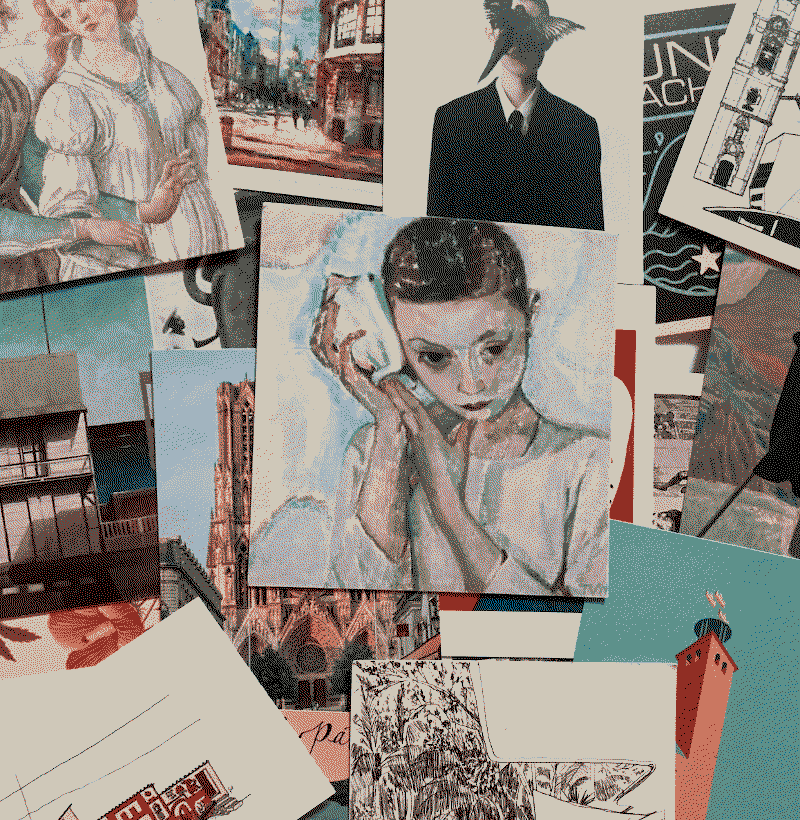
New Favorites
So far, this year's grand revelation is The Name of the Rose by Umberto Eco (along with Camus' Le mythe de Sisyphe, but I am still working on it). In one novel, Eco managed to speak to my childhood love for detective novels, my teenage nerdiness for learning as much as possible about anything and everything (including medieval Europe), and my present concerns about the nature of truth and living with truth in an ever-changing world of difficulties and possibilities. The prose was poetic and funny, page turning and almost inscrutable. Timeless and present with a 12th century setting, it is a transcendental book that I hope will always keep me company.
Before The Name of the Rose, I started the year off with Italo Calvino's Invisible Cities, and it provoked a very different type of awe. While Eco (and Camus) read grandiose and monumental, in many ways, Invisible Cities is quiet, but powerfully so. It achieves timelessness in a very different way, too. Like Eco, Calvino places us in a historical past, that of the Silk Road, Marco Polo, and Kublai Khan. However, where Eco as a medievalist is relatively rigorous, Calvino writes loosely and a parallel dream world arises from the history he is inspired by. Fantastic city after fantastic city, I felt more and more drawn into the world Calvino pieced together, a world that uncannily drifted very close to home, every so often, especially in the moments that, at first glance, appeared to be the most dream-like.
I extend an "honorable mention" to In Praise of Shadows by Tanizaki Jun'ichirou, which I read in the French translation (Éloge de l'ombre). The beautiful long-winding sentences unfurled quietly into piercing insights, not only about the development of Japanese culture up to the 20th century, but also with regard to what it means to attribute and develop value judgements within a cultural context. What is beauty? What is goodness? Tanizaki presents a calculatingly messy train of thought that waxes poetic. It is essay-poetry, in a sense. At the same time, I could not fully embrace Éloge de l'ombre due to the lingering taste of an essentialism that felt almost deterministic. At a moment of rising insularity and nationalisms, I find the quest for "essences" troubling. There is a fine line that shapes the difference between understanding how aesthetics and ways of doing arise from culture, and prescribing a certain way of doing as essentially "Japanese". And while Tanizaki displays a degree of self-consciousness as to the development of cultural norms within specific contexts and circumstances, he also does not hesitate to issue very clear-cut assertions that read too much like givens or truths about what a group people is "essentially" like. Nonetheless, a book I look forward to revisiting.
Illuminations
I have read two illustrated works during these first six months of 2025, Jungle Nama: A Story of the Sunderban by Amitav Ghosh and Salman Toor, and Looking for Luddites by John Hewitt. Both books made me reflect on the interplay between text and visual arts, which I think is very pertinent at a time that many predict (and/or lament) that both will be mechanized away.
This was my second reading of Jungle Nama, which I bought from Araku, a coffee shop we frequented during our stay in Bengalore. Looking for Luddites was found at a magazine and stationary shop I am fond of in Bristol: Rova. In a way, I encountered both books as artefacts that caught my passing eye.
For many decades, the predominant mode of thought has placed illustration as subservient to the written word. And in a way, illustration could even be considered as a "threat" to the seriousness of a book. Are picture books perhaps not "real books"? Jungle Nama and Looking for Luddites demonstrate that it is not so (as do so many other brilliantly illustrated books, such as the Alice books). Illustrations here prove to be not merely decorative, but rather are as essential to the storytelling as the text. The unique perspective or "eye" of the illustrator (even in the case of Hewitt, who is also the writer) cannot be subtracted away.
It is interesting to think about these books together, what does the retelling of a Bengali myth about the Sunderban mangrove forest have to do with the retelling of the Luddites' uprising against industrialization in Northern England? So much, it turns out, as both little books explore the nature of human greed as well as the complex relationships between human settlement and the natural world. In both works, authors and illustrators look to the past to raise timeless concerns that are among the most urgent today due the generalized use of AI and the destruction of our ecosystems. In both works, the "expendability" of human life mirrors the "expendability" of ecosystems, animals, and all other forms of life.
A parting thought related to pertinence, I read Jungle Nama at the same moment that both India and Pakistan were, once again, at the brink of war. Authored by an Indian writer and illuminated by a Pakistani illustrator, the book stands as a powerful contrast to war, illustrating what could be possible by coming together instead.
Reconsiderations
I have recently re-read two books of Latin American poetry, the Chilean poet Alejandro Zambra's Mudanza and María Mercedes Carranza's El oficio de vivir, the latter of which I wrote about for the original August Reads entry. I bought both books at the Bogotá Book Fair (FILBO) in 2024, and I picked them up again when I was feeling nostalgic about not being at FILBO this year.
First, I realized that I enjoyed both books more on the second read, which confirms by experience the well-known adage that good poetry must be re-read. In a sense, this reencounter with Zambra and Carranza is part of a multi-year reconciliation with poetry that first begun with Louise Glück. I had initially failed to connect with poetry, despite my love for reading, and I then struggled with it as a university student after the "Poetry 101" teaching assistant took great pleasure in announcing that the course was meant to "weed out" students from the English major. I survived the course, but ultimately chose not to major in English.
I had already appreciated Carranza's work on my first read, however, I couldn't quite count it among my favorites because I found the collection's bleakness to weigh too heavy. Carranza masterfully conveyed the hollow feelings of depression, and it was almost too much to bear. On a second read, however, my initial reticence has given way. The shock of encountering Carranza's profound listlessness and melancholy has subsided, and I felt like this time I could better perceive the beauty she crafted from the shadows. Despite of everything, glimmers of life shone through the despair and with the despair. It is a special book, compiled by Carranza's daughter with a lot of thought and care. I wish Carranza's poetry could be better known outside of Colombia. (And I wish I could translate it.)
My thoughts have strayed far, as usual, so I will continue my 2025 book reflection in a second entry.
Other Interesting 2025 Reads
- "The Master’s Tools Will Never Dismantle the Master’s House"
- "Permacomputing Aesthetics: Potential and Limits of Constraints in Computational Art, Design and Culture"
- Andrea
01.06.2025 // Café colombiano
Bath, England ⬔
For most of my (relatively brief) adult life, I took a bit of pride in being the Colombian who did not drink coffee. The association between coffee and Colombia is almost as tight as that of spicy peppers and India or potato and Eastern Europe. And yet none of these quintessential crops are "native". The potato and the peppers are technically "ours", they are native to the Americas. Meanwhile, coffee is traced to the Arabic Peninsula and the Horn of Africa. I cannot deny, however, that the "tinto" (a watery black coffee) is as near and dear to Colombians as tomatoes are to Italians. Nor can I deny that my childhood memories of lazy Saturday mornings are steeped in the aroma and flavor of a very milky café con leche. Almost everyone in my immediate family grew up drinking coffee (even if in very low doses).
Still, beyond the nostalgia for the childhood café con leche accompanied by a cheesy arepa and huevos pericos, I did not understand the general public's devotion to coffee. That it was necessary to drink coffee to get through a day was really off-putting to me; I did not want to depend on a drink to live my life. And then, when I first encountered all the different contraptions for "fancy" coffee brewing as a student in Chile, I was dismissive out of ignorance.
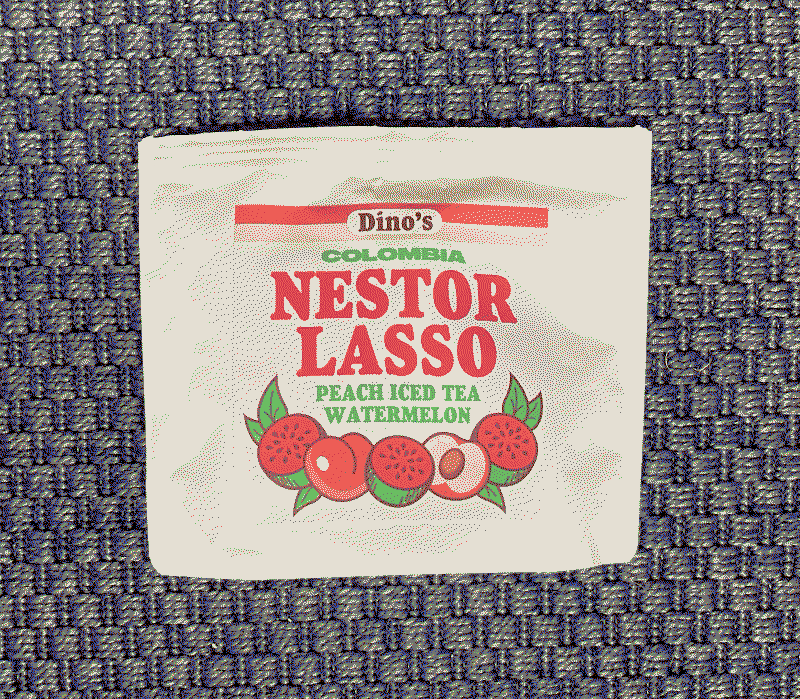
Coffee continued to be like a distant cousin seen only at family gatherings until the day I moved to Sweden. From the Arabian peninsula to South America to Scandinavia—the coffee plant has journeyed far. However, sitting in a cozy café in Stockholm with a warm kanelbulle on a dark cold evening, the prospect of a brygkaffe didn't seem all that bad. I could then understand why the Finnish and the Swedish were the top coffee consumers in the world.
Having coffee in Sweden is how I discovered the very first reason why I did not "get" coffee. The coffee we drink in Colombia, and much of Latin America, is incredibly watered down. Not only is our coffee flavorless because of this, but it is also intolerable to drink any stronger because of how burnt the widely commercialized coffee grounds are. In Colombia, we have long been left with bottom barrel coffee, and families have done the best to make it last on a tight budget.
But, it has not always been that way. Arguably, the status quo of Colombian coffee is a relatively new state of affairs.
After discovering that drinking coffee could truly be pleasurable in Stockholm, I was much more open to reencountering coffee in my own hometown. In Bogotá, Marc and I hopped from café to bookstore to café to art gallery, and gradually we discovered what a pour-over was, what a V-60 was, what a Gesha was. At one of the coffee shops in the historic Candelaria neighborhood, the owner shared his own coffee journey with us as he brewed our cups. After growing up in one of the most troubled neighborhoods of Bogotá, he only got his very first taste of excellent Colombian coffee while abroad in South Korea. Shocked, he became convinced that all Colombians should be able to taste and enjoy what was being massively exported away as a luxury. After training as a barista, he brought café de especialidad to his neighborhood, first, before opening up a second shop in Candelaria.
So, what was Colombian coffee like before all the good beans were exported away? The answer lay much closer to me than I imagined. Wanting to share the delicious coffee with my family of avid coffee-drinkers, I invited them to a drip coffee demonstration at Xue Café. I was excited to see their reaction, but instead of the shock of novelty, it was the warm surprise of an unexpected reencounter that animated their conversation. They insisted: this was the way my great-grandfather brewed coffee. No, not with a ceramic V-60 nor with specialized water pourers and electronic scales. He fashioned his own type of "pour-overs", using cloth filters, a kettle over a fire, and the beans he had grown, picked, dried, and roasted himself. My family had not tasted a coffee like the one they were having in this specialty coffee shop since those days back on the farm.
It had only taken two or three generations for most Colombians to lose access to good quality coffee. Only now the tide is beginning to slowly turn, but good coffee remains unaffordable to many and often perceived as "fancy" and, ironically, as "foreign" and "strange".
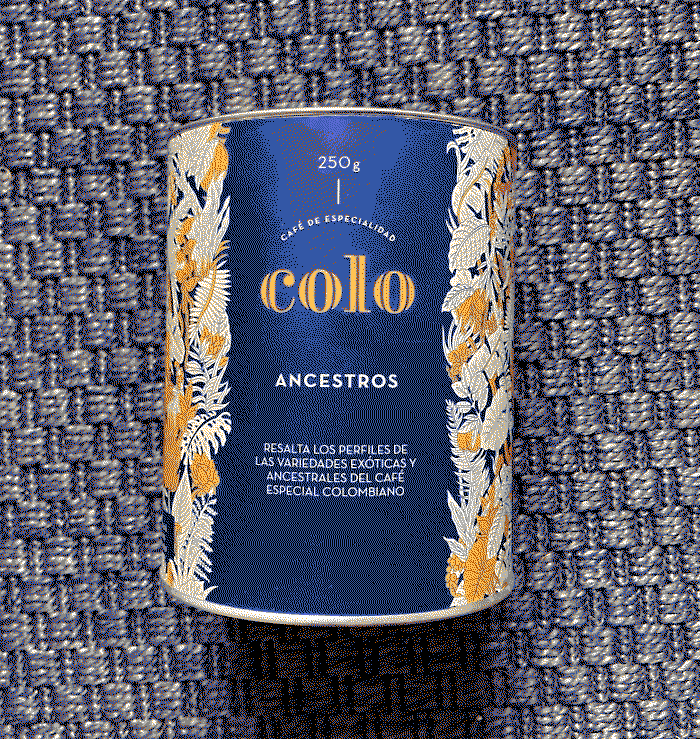
Last year, Marc and I attempted to brew our own pour-over or drip coffee for the first time. When we left Colombia for Cyprus, we brought some coffee grounds with us, as a way of bringing along a little piece of home and its aromas. We began our experimentation with some grounds from a local Limassol roaster, wanting to save the coffee from Colombia for when we got the processes just right. We did not know then that coffee brewing would become a multi-month journey. Nor did we expect that we would end up hand-grinding our own beans.
There are plenty of issues with how the world drinks coffee, the environmental and socioeconomic impact of it all, especially when it is Nestle or another unscrupulous company that commercializes the coffee (and many "fancy" specialty shops and roasters are not at all exempt from this). But, I have also seen many small shops, roasters, and artisans fighting to make coffee fairer for everyone. It is not just about putting a nice story or name to a coffee bag. They display prominently how much coffee farmers are paid and lay bare what their profit margins are. Under these conditions that foster transparency and solidarity, when I walk into a coffee shop and see the names of the farms, the places, and the people who work hard to make coffee possible, it makes me feel a little closer to home.
- Andrea
23.05.2025 // The Comma Directory Restructuring
Bath, England ⬔
I've meant to write (and I always mean to write) about our arrival to Bath—which has been truly revitalizing and has offered some harmonious continuity to our time in Devon and Selgars Mill.
However, I have been occupied in the pruning and clipping of previous Comma Directory entries that, over time, seem to have grown unwieldy, outgrowing the categories and sub-categories we have plotted them into. It has taken me some time, and it has got me thinking.
Curatorship is a topic that has long interested me, and it has become more and more pertinent in navigating the complexities we encounter—growing complexities—many would say, as the world grows more and more complex with AI, a changing climate, the threat of war. But I would say, instead, that complexity was already here all along. It could been found in the simplicity of a leaf that photosynthesizes or the star that twinkles in the night sky.
Hence, there is a "primal" need to curate, or categorize, or simplify. These actions are not strictly synonymous, but tightly bound to each other. I think, at least.
The issue with trying to place an infinitely complex experience of existence into neat categories has long been discussed within science, philosophy, technology, art. Our representations of the world are limited, and that is precisely why they are meaningful. By placing limits, which is to say prioritizing some facets of existence over others, we voice a point of view. This is why diversity of representations is so important—but it doesn't mean that limits themselves are "bad." Without limits, without the brain's ability to curate the complexity of each passing moment, decision-making, survival, meaningful and directed action would all perhaps be impossible. It is known, after all, that the "infinite" choice of streaming platforms, food delivery, and dating apps can often be debilitating and paralyzing. As can be the "infinite" flow of news and social media posts.
And these choice-laden systems do not even begin to approach the true complexity of how our planetary systems operate, not to say the universe.
All of this to say, I have been toying around with The Comma Directory's Concepts, Media, and Travel pages. I have been questioning whether having a "Design" category is too broad, and what the difference between design and other creative practices is. And, should sub-categories be included into multiple categories or restricted to a single one? It might not help that lately Marc has been reading the book, What Design Can’t Do: Essays on Design and Disillusion.
Ultimately, what are these categories for? Which in the end is the same as asking: what is The Comma Directory for? Developing a system for categorizing main ideas and themes is at the heart of our founding concept. It is a work in progress, and in a sense, it always will be. The categories will always overlap in some ways that are perhaps uncomfortable, and maybe there will also be some gaps that are hard to fill. Imprecisions.
I can imagine that many may consider that AI is particularly well-suited for this task, with its powered up pattern-recognition. Feed it the texts and have it spit out a systematization that, with the right prompting, could be "better" than anything that we can produce manually. Less time consuming, too. Why not? Maybe, while it is at it, it can also generate the entries and the images.
If making "sense" of the everyday complexities that bombard us is one of the most important functions of our brains, if our ability to make purposeful decisions has to do with our brain's ability to curate, to pick and choose, to categorize and, therefore, judge—then the work we do manually at The Comma Directory is profoundly rooted in what it means to think. In our vibes-bent era peopled with all sorts of energies and traumas, "feeling" feels much more fashionable than "thinking." And while I find modern, postmodern, and contemporary critiques of rationality to be very important, I echo Camus in saying that, while I acknowledge the many limitations of "reasoning", I do not deny "reasoning" in it of itself. And I do not want to automate away the very mental processes that constitute reasoning, and which I perceive to be very closely linked to my own agency and liberty. Not to say that intuition and feeling do not play an essential role, a role that is perhaps more closely tied to reasoning than traditional dualist conceptions of thought allow.
Ultimately, when I sit down to edit, reorganize, redefine, and recategorize, it is almost like I can feel changes starting to blossom from within, in real time, as I focus and tinker with our little website. I feel new questions begin to emerge, ideas begin to form, old ideas begin to transform. Maybe that is also why this entry is growing so much more longer than I anticipated.
There is a pleasure too that comes with all this thinking, of feeling yourself being transformed by interacting with a challenge and all the difficult questions it brings with, even when you do not fully succeed (which is often the case). The pleasure I derive from the curation and restructuring of The Comma Directory is also akin to the pleasure of moving to a new home, finding the nooks and crannies in which different little aspects of life can fit into. Here, the washing, there, the books. It is as much the art of adjusting the space to our lives as our lives to the space. Which is why it has been very fitting to work on The Comma Directory's categorization system at the same time as we have been settling into Bath and creating our short-term home here.
So, what's changed on here? New sub-categories have appeared, emerging from nearly a year's worth of writing and living, which is exactly what we hoped for from the start. I have also re-arranged some major categories within Concepts. For example, "Writing" has become "Creation", to cover a broader range of creative acts that we engage with. Thanks to Marc, each entry has its own page now, and can be accessed via the little square next to the location. Within media, there is some restructuring ongoing related to each "media" type. While we started with just "Books" and "Film", now we have "Articles & Essays", "Lectures", and "Websites". I am working on new ways of displaying a growing list of favorites, and hopefully implement a Reading Journal and a Film Journal. The new "Reviews" sections will include scattered thoughts on the different media types, rather than reviews in the strict sense of the word. I feel joyful about what The Comma Directory has grown into so far, and what it can grow to be with some continued care and attention.
- Andrea
29.04.2025 // Lucidity and the Sun
Bath, England ⬔
Lucidity. A concept Camus explored in a few of his essays, and that in many ways echoes a kind of personal philosophy that Andrea and I have been developing. To us, lucidity means to see the world for what it is, instead of ascribing grand narratives or superstition to it as a way to console ourselves for the perceived "meaninglessness" of existence.
In The Stranger, Camus writes about a man named Meursault and describes his complete indifference to the world. Meursault is meant to be unrelatable. Someone who seems almost inhumane, and so, who would not be able to relate or empathize with us either. Through his actions and attitudes, Meursault reveals what Camus calls "the absurd," which has to do with the perceived absence of meaning in life. However, Camus also introduces symbolism to reveal that as humans, we can rebel against the absurd.
In the very first scene of the book, when Meursault finds out his mom died, his apathetic response is difficult to stomach, as it is later on, when he encounters the titular stranger. In both scenes, Meursault focuses on a light that flickers or the sun that blinds him. His fixation on light during moments in which more "important" things occur, like the death of his mother, increases the distance between Meursault and the reader.
The light and the sun to me represents two things in this book. On some level, the distance we feel between ourselves and Meursault serves as a reminder of our innate urge to care, even when the world appears to be meaningless. An urge to care that Meursault does not seem to experience.
But the depiction of light also serves as another reminder, that when we feel the weight of the absurd the most, the shining light can set a path forward. The light shines on our skin and makes us see, and so it reminds us to be present. When we are present and experience the world for what it is, lucidly, we can revolt against the absurd.
This idea of lucidity and Camus' articulation of this concept was eloquently spelled out in a recent episode of Philosophize This on The Stranger, and I felt myself just nodding along in agreement.
- Marc
27.04.2025 // Ubuntu
Uffculme, United Kingdom ⬔
As AI slop begins to become omnipresent, curation and support will be more important than ever. I think we can carry this anxiety that our artistic efforts will cease to exist if we are replaced by machines.
Here is the thing though: if we collectively decide not to let that happen, it won't. If we continue to buy art and support endeavors we believe in, those endeavors can continue to be.
That's why I think that, today, it is more important than ever to support compelling independent projects and to promote them. That way, we can build the society that we want: one in which artists can thrive without having to resort to tools that go against their ethics.
Recently, I've made an effort to end many of my subscriptions, for example Spotify, and then spend that money instead on artistic, tech, or social projects that speak to me. That does limit my access to popular media, but at least I am more mindful about what I consume.
Recently, Andrea and I booked tickets to go to South Africa. In various Bantu languages, there exists the term ubuntu, which roughly translates to I am because we are. I am excited to learn more about this idea when we are there. For now, the definition I found online really speaks to me, ubuntu "encompasses the interdependence of humans on one another and the acknowledgment of one's responsibility to their fellow humans and the world around them" (Wikipedia). I think the philosophy that underpins ubuntu may be very relevant to face the questions and challenges of our times.
-Marc
04.04.2025 // Pequeña bitácora bibliográfica I (08.2024 - 03.2025)
Uffculme, England ⬔
Around the time we first began to build Comma Directory, I acquired a little notebook which I wrote about in my very first post: "The Small Bibliographic Log" from the independent Colombian press, Rey Naranjo. Almost eight months later, the log is now filled to the brim with the readings and thoughts that have accompanied me from Colombia to Cyprus to Sweden to France, and finally, to England.
To commemorate the completion of my first pequeña bitácora bibliográfica, I have picked out a selection of quotes, some of them I have had to dig out of the tight corners that I stuffed them into as I ran out of space on the page. And so, ...
"Recuerdo que [...] escribía sobre toda la superficie del papel, sin respetar ningún margen. Eso me daba la sensación de llenar completamente un vacío".
– Mario Bellatin, El libro uruguayo de los muertos
"At the end of my patient reconstruction, I had before me a kind of lesser library, a symbol of the greater, vanished one: a library made up of fragments, quotations, unfinished sentences, amputated stumps of books."
– Umberto Eco, The Name of the Rose
« Nous voyons ces filets, leur beauté, leur appartenance tout à la fois à la liberté et à la capacité de capturer, oui capturer. »
– Franklin Arellano & Julia Bejarano López, Entretierras
"Suspended over the abyss, the life of Octavia's inhabitants is less uncertain than in other cities. They know the net will last only so long."
– Italo Calvino, Invisible Cities
"What is the consciousness of guilt but the arena floor rushing up to meet the falling trapeze artist? Without it, a bullet becomes a tourist flying without responsibility through the air."
– Richard Condon, The Manchurian Candidate
« Est-il aucun moment
Qui vous puisse assurer d'un second seulement ? »
– Jean de La Fontaine, Fables Choisies
« Il faut sinon se moquer, en tout cas se méfier de bâtisseurs d'avenir. Surtout quand pour bâtir l'avenir des hommes à naître, ils ont besoin de faire mourir les hommes vivants. L'homme n'est la matière première que de sa propre vie. »
– Jean Gino, Refus d'obéissance
"Whatever he did allowed him to be told [...] that he indeed existed, that he was not, as he had always dreaded, a figment of his own imagination, or of God's imagination, who disappeared when the lights went out."
– Richard Condon, The Manchurian Candidate
"¡Morir, Dios mío, morir así tísica a los veintitrés años, al comenzar a vivir, sin haber conocido el amor [...] morir sin haber realizado la obra soñada, que salvará el nombre del olvido; morir dejando al mundo sin haber satisfecho las millones de curiosidades, de deseos, de ambiciones [...]"
– José Asunción Silva, De sobremesa
"Pienso, antes de ponerme polvos
que aún no he comenzado
y ya estoy por terminar".
– María Mercedes Carranza, El oficio de vivir
« Elle rêvait aux palmiers droits et flexibles, et à la jeune fille qu'elle avait été. »
– Albert Camus, L'exile et le royaume
"I think here I will leave you. It has come to seem
there is no perfect ending.
Indeed, there are infinite endings.
Or perhaps, once on begins,
there are only endings."
– Louise Glück, Faithful and Virtuous Night
"I shall soon enter this broad desert, perfectly level and boundless, where the truly pious heart succumbs in bliss. I shall sink into the divine shadow, in a dumb silence and an ineffable union. And in this sinking, all equality and all inequality shall be lost [...] I shall fall into the silent and uninhabited divinity, where there is no work and no image."
– Umberto Eco, The Name of the Rose
"In the midst of the word he was trying to say;
In the midst of his laughter and glee,
He had softly and suddenly vanished away—
For the Snark was a Boojum, you see."
– Lewis Carroll, The Hunting of the Snark
- Andrea
24.03.2025 // Portability and Resistance
Uffculme, England ⬔
Portability is a very underrated quality.
Typically, we have a set of a few tools that help us get on with our life: maybe that is a GPS, a messaging platform, a design tool, etc. When the tool we use is only available on one platform, then we are coerced into using only that platform and ceding our agency to it. When we have software that is portable, however, we are free to leave a platform and choose another. It therefore empowers the user, giving us a voice (and a choice).
Portability and compatibility tend to be the lowest of priorities for a tech company, that is unless companies find themselves obliged to build software with these two qualities in mind.
One way to make modern toolmakers prioritise portability and compatibility is by setting regulation and standards. While some argue against these type of impositions on businesses, portability and compatibility standards would also benefit companies as they would also be able to make use of the diverse tools built around these standards. However, companies would need to relinquish control, the very same control that has been taken away from users. This generates an interesting phenomenon by which adding some restrictions to what we can do when we run businesses, allows us more choice and freedom in other ways.
Another force to provoke change is through consumer demand and the market. The dominance of Internet Explorer once made it so that developers accounted only for the specifications and needs to run on Internet Explorer, making access to the internet via other browsers more difficult, and at times impossible. Internet Explorer could also leverage its dominance to set standards that permitted it to perpetuate its monopoly and, in a way, force individuals to use it. However, the growth of alternative browsers eventually forced developers to account for more than one browser. It also forced Internet Explorer to start playing nice, as it could no longer solely influence the established standards.
It might be worth asking ourselves how portable a piece of software is when we choose to use it, as well as reflect on the degree to which depending on certain software can lock us into one way of doing things or into a closed ecosystem controlled by a single vendor. And not just the software itself, but also the data it generates.
- Marc
17.03.2025 // Solange.
Uffculme, England ⬔
It has been a while since I last read and wrote. Work has been overwhelming, and the time I had to spare went into exploring the fundamentals of Linux.
But today, I finally managed to read a bit again. When I was younger I used to hate Swedish literature, perhaps because of traumatic recall to school. However, reading in a language other than English–especially in a Swedish from a time when the world carried less universal cultural references–is interesting. And thus, I have discovered a newfound love for Swedish literature.
I have begun to read Willy Kyrklund's Solange. It kicks off with a poem and an intro I want to share:
Where does all song go, that becomes suffocated and trapped?
Where does all hope go, that reaches nothing?
Could be that it abounds in the earth and water.
Could be that it whistles in the wind all around.
– Karin Boye
Or in Swedish:
Vart går all sång, som blir kvävd och innestängd?
Vart går all längtan, som når ingenting?
Kanhända den i mullen och vattnet ligger mängd.
Kanhända den viner i vinden omkring.
– Karin Boye
Followed by this intro:
This story shall tell the tale of Solange and Hugo. It carries, thus, not both names–Solange and Hugo. It carries only the name of the loved one: Solange.
- Marc
10.03.2025 // Arrivals and Departures
Paris, France ⬔
After a week of sunny blue skies, the rain has returned and so have the clouds. As it should be, it is only early March after all.
But we had so much fun in the sun, and that is how I believe Marc and I will remember Château de Feÿ. The view over the valley, the white stone (blinding in the daylight), the soft grass, the smoke of the barbecue, the forest. Or will it be the perpetual fog of late January and the muddiness of the earth that remain?
There is a near perpetual extravagance to what goes on at Feÿ, at least at first glance. Themed parties, cyber-workshops, spontaneous art installations, ghosts and AI-oracles. And yet, the magic of the château has revealed itself to me, over time, in its quietest corners and most mundane minutes. Like sharing a cooking shift, a cup of coffee, a ride into town, a wagon on the train from Joigny. It is on that train that I have ultimately felt at home at Feÿ, leaving and returning in the company of others that have shared the experience of the château. It makes me look forward to a return, someday.
- Andrea
21.02.2025 // Constellations
Villecien, France ⬔
When the world appears to be pregnant with possibility, I take it as an invitation to embark upon a journey. Or, when I embark on a new journey, the world often appears to suddenly be pregnant with possibility, such as it appears to me now, after some recent day trips to Paris. But even after returning to the rolling muddy hills of the Yonne, I continue to be restless, yearning to visit and revisit as I have just done at the Palais-Royal, the courtyard of the Louvre, the narrow roads from Opera to Châtelet and the Centre Pompidou.
Wandering up and down the streets of a beloved city brings me a quiet but intense joy, akin to the feelings evoked by my favorite books, films, images, music. And so, I decided to embark on another journey, but this time through my memory, the internet, and some ink.
It has resulted in maps and constellations of those special works of art that move me and renew my gaze. Perhaps these are the transcendental feelings that others find in religion, ritual, patriotism, and/or mind-altering substances. I guess this could be a creative ritual of sorts, but I find the language around ritual and transcendence to have become so tired lately.
So, here is a brief inventory of my eclectic mental re-collections of sights, sounds, and feelings.
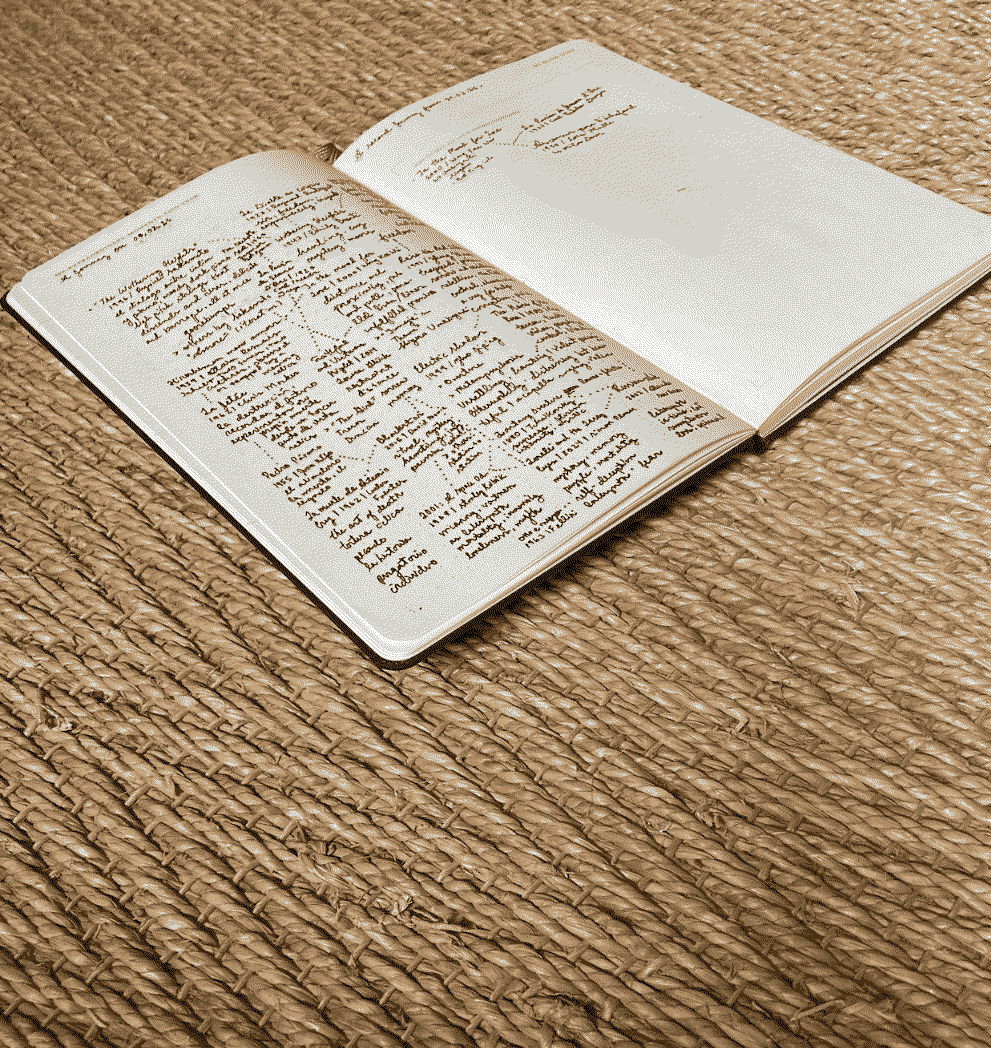
Books
Jane Eyre by Charlotte Brontë
Wuthering Heights by Emily Brontë
Le Diable au corps by Raymond Radiguet
The Name of the Rose by Umberto Eco
La muerte de Artemio Cruz by Carlos Fuentes
Pedro Páramo by Juan Rulfo
Faithful and Virtuous Night by Louise Glück
Music
"The Wuthering Heights" by Sakamoto Ryuichi
"Amore" and "Solitude" by Sakamoto Ryuichi
"The Girl - Theme" by Trevor Duncan
"Yumeji's Theme" by Umebayashi Shigeru
"Romeo and Juliet" by Pyotr Ilyich Tchaikovsky
"Overture" and "Metempsychosis" by Zhao Jiping
"Blackstar" and "Station to Station" by David Bowie
Film
Les Quatre Cents Coups by François Truffaut
Raise the Red Lantern by Zhang Yimou
Russian Ark by Aleksandr Sokurov
2001: A Space Odyssey by Stanley Kubrik
La jetée by Chris Marker
In The Mood for Love by Wong Kar Wai
L'Ascenseur pour l'échafaud by Louis Malle
Hiroshima mon amour by Alain Resnais
La Passion de Jeanne d'Arc by Carl Theodor Dreyer
The Seventh Seal by Ingmar Bergman
And More
Lorelei and the Laser Eyes by Simon Flesser & Simongo
- Andrea