Log (rss)
08.02.2025 // The Pleasure of Re-encountering the Blank Page
Villecien, France ⬔
« [...] nous nous sommes avisés à nouveau de la douceur et de la chaleur, que nous avons pour un temps oubliées, propres à cette substance qui a nom 'papier' [...] » – Tanizaki Jun'ichirō, Éloge de l'ombre (p. 24)
After the first half of December, I have not sat down to write again. This is a lie, of course. I write all the time—for work, in my journal, agenda, out of obligation, obligations that I have engaged in voluntarily (as a form of self-torture). There is also a cloud of ideas and texts yet to be written that every so often haunts me. This entry, for instance, which I have been imagining for some time now.
And still, since December I have not sat down to write—
that which I want to write the most. Those texts that are like a pond or the rain, beautiful and completely lacking in any mission or argument (which is not to say disengaged, but that is a topic for another entry).
For much of last year, I have tweaked, re-written, and elongated pieces of flash fiction, satire, the possible first chapter of a longer story. I have reworked the same texts over and over, and I have gone back to old writing that I had given up on, only to re-discover its potential. And of the new writing that I did do, most came from ideas long present in my mind. Perhaps this was the result of having thought so long about writing without actually doing any writing (of this kind).
In any case, there came a moment in which I felt the urge to sit down and begin to write again. Really write. And while a part of me was excited to jump back in and take a look at last year's writing with fresh eyes, I also felt like starting off the year with something new. So I opened up my journal and my agenda (I have fresh pages in both) and I sat down to think about what to write about.
Nothing came to mind.
The white winter light glowed on the vaguely yellow textured paper. My mind felt as blank as the page, and I discovered that I liked that feeling. This was no writer's block. There was no anxiety, fear or frustration. Instead, I felt as illuminated as the blank page by the windowpane, which seemed to promise so much in all its emptiness. As if anything could happen now.
- Andrea
08.02.2025 // A Hiatus: Through the Wormhole
Villecien, France ⬔
It snuck up on me, on both of us, as the days grew chillier and darker—in a way that had seemed unimaginable in the heat and brightness of September. We were, after all, in the very heart of the Mediterranean. White rock, bright sand, the big blue sea.
Now, it is the misty grey grounds and the muddy forest paths of the Château du Feÿ that surround us. How can it be?
But I know exactly how we got here. I did the bookings myself. All it took was a flight, too many trains to count, a few border crossings, a Swedish Christmas, a night in Germany, Paris.
And yet, returning to Comma Directory after two months of travels, holidays, and the flu (again), it feels as if I had just stepped away from my computer for a moment. Pistacho has run off, wagging his tail, to fetch a big stick, I have wrapped myself in a shawl, the water is boiling in a kitchen in Paramytha. And suddenly, I am in France and the grey day is quickly and quietly coming to an end behind the bare black branches of the forest. And then, it is as if Cyprus, Limassol, Paramytha had all just been part of some faraway dream.
- Andrea
24.11.2024 // Paphos!
Paramytha, Cyprus ⬔
Yesterday, we drove to Paphos to visit of the Tombs of the Kings, a major archaeological site and necropolis for the wealthy and powerful of the late BCs.
From the distance, we could see the white-washed city sprawling along the blue Mediterranean coast. Smaller than Limassol, but also hillier, I discovered Paphos as a place of contradictions.
Angular buildings from the 90s or early 2000s dot the long coastline. Here and there, there were some more contemporary structures mixed in. Elevators connect the lower part of the city, which we quickly discovered was all resorts and holiday rentals, with the old town that was constructed up on the hills.
A cross between charming and desolate, the old town managed to be a sort of lively ghost town. We stopped by a taverna that was full of people and live music, but the neighboring streets still felt hollow and empty, somehow. Freshly painted shops looked as if they were just about to open for the first time, while right next door the other buildings appeared to be crumbling. The minaret of a grey-stoned mosque nearby rose into the sky.
On the big roads, we witnessed cars fighting for space around rotundas, and it seemed suddenly like that’s where everyone was (if not in a taverna): in their cars, going somewhere.
From a first glance, it would be impossible to guess that this all lies on top of porous limestone and monumental ancient ruins.
The huge stone cut niches and temples we visited at the Tombs of the Kings were once filled with precious Hellenistic or Ptolemaic sarcophagi and treasure. Now, they house pigeons, native to this region, along with the recently arrived Asian hornets. The empty tombs house a damp and dusty darkness too, it’s an emptiness that feels dense. Uncanny in its weight.
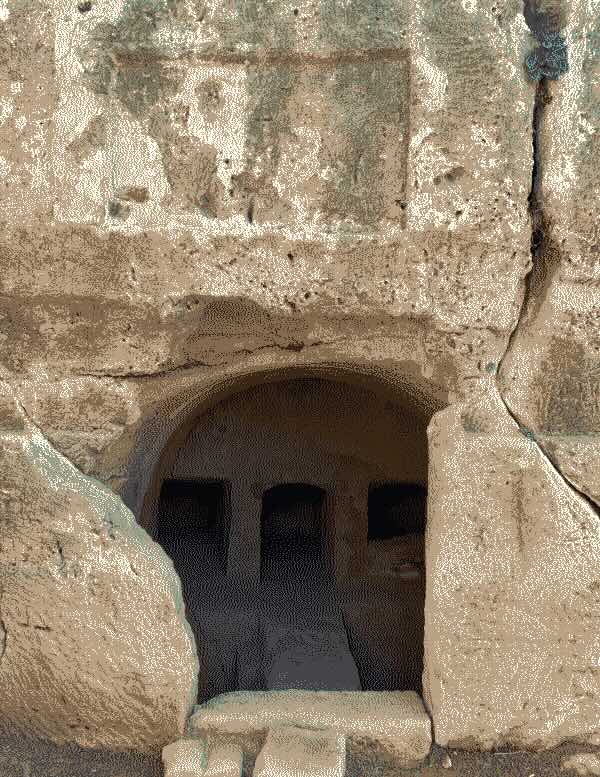
What fascinates me the most about visiting archaeological sites is how the experience deconstructs a sense of normalcy; something that can also happen with intellectual discoveries. I have experienced this first-hand in the classroom, while studying history, astronomy, or literature. But at a site, the deconstructiong of normalcy happens in a very physical way. Suddenly, I am standing at the edge of this hole in the ground, and I see doric columns below me, rising up as if holding up the rock and ground that I stand on.
To borrow a cliché, my perspective is shifted, literally. The usual rules of the game, on how to interact with a building or a space, are challenged. As much as the exposure to different narratives through books and film and conversations serves to challenge our preconceptions, there is something about movement—moving through a space and experiencing distances, heights, and depths differently—that hits home. It’s a very visceral reminder of the vastness of pretty much everything: the planet, history, culture, microbiology, outer space, which is fun to encounter on a “small” island like Cyprus.
Ever since I took a history class on Salsa music and dance a few years back, I’ve been noticing how the concept of “embodiment” pops up from time to time. And if I really think about it, I had already begun to think about "embodiment" after my undergraduate capstone course on Cervantes' short stories, which feature some interesting body-centered themes.
This has been significant to me because I grew up very "mind" centered. It's interesting to think very deliberatively about what it means to be "in" a body or to be a body, especially in thinking about how movement can be an act of knowledge-making or knowledge-sharing (something we usually associate exclusively with "the mind"). And what about storytelling? I also find it interesting how controlling movement can be a powerful tool in the hands of authorities, and how encouraging certain types of movements can also foster collective myths—thinking of Youth Groups in Nazi Germany or cults that have their members do physical labor or specific types of sport. And well, there is a reason that "movement" is also used to describe social, cultural, political changes like the labor or the feminist movements.
Moving around Cyprus has been very interesting (especially without owning a car). And this visit to Paphos has definitely been a highlight of my time here. It has given me a lot to think about.
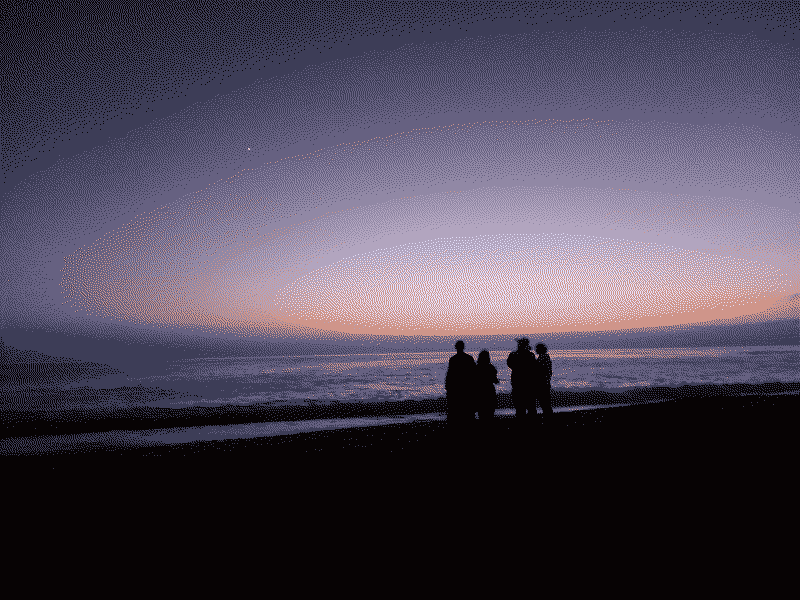
We concluded our latest mini-trip, daylight fading fast, at a curving pebbly beach, which myths tell is the birthplace of Aphrodite.
- Andrea
06.11.2024 // Glimmers of Spring as Winter Sets In
Limassol, Cyprus ⬔
There are now more birds in Paramytha than when we first arrived. They sing from a scenery that is now greener due to the rains that have arrived with them and with the end of summer. The days are still warm, but the nights are fresh—now populated by new scents, awakened by the humidity that has set in.
When it rains, it pours, and that’s exactly what has happened in Limassol. During a recent, sudden thunderstorm, a tornado was spotted near the city. All the while, the air has been heavy with dust and particles swept up from the Sahara. Coughing, cold, soaked, it has been hard to not feel like Cyprus is testing me. Every time I try to crawl out of sickness, weariness, stress, there is a new challenge to face.
But this post is not really about that. Not directly. It is about the day after the storm, when I headed out to the local taverna for a Halloumi wrap. Milos Taverna was a bit emptier than usual, the lights dimmer. The two men who seem to run the place were hard at work in back room. Something seemed off.
It turned out that the thunderstorm and wind had produced leaks, flooding parts of the taverna and shutting them down for the day. But even so, they insisted on making me something. There was a bit of dry charcoal leftover, after all!
That small act of kindness, despite the big headache they were dealing with, really touched me. I felt guilty too, after all, running a business is tough. I didn’t want to put them through more trouble, and I wondered how I could tip them as a thank you. But when it came time to pay, the owner handed me the pita and told me it was on the house.
It seems like these past few days after the rain, I notice glints and glimmers of this sort of kindness all around. A kind word from an old professor, genuine curiosity about my work from a stranger, a joke from the barista at the usual café.
In spite of winds, dust storms, viruses, and the weight of a day like today, glimmers of kindness persist and remind me of the things that are worth nurturing and protecting.
- Andrea
31.10.2024 // On Milestones and Sisyphean Boulders
Limassol, Cyprus ⬔
This is a celebratory log, despite the titular allusion to the Greek underworld. It has finally happened, I've officially been published.
Today, the second issue of The Madrid Review was released, which marks my poetry debut (in Spanish). Three little pages, three little poems. That's all it is, but it's a fulfillment of bookish childhood dreams. Books and printed media have always seemed like such authoritative items, and it did not seem possible that the words I wrote could actually be printed inside "official" books. All the while, I was constantly creating magazines and books from colored construction paper, notebook pages, Word Documents, and anything else I could get ahold of.
What makes October 2024 doubly special is that it was also my short fiction debut in English with The Good Life Review.
These milestones have been made possible by two teams of editors who recently started their own literary magazines (The Madrid Review was founded just a few months ago), who don't make a profit, and volunteer their time to foster the arts. It's inspiring to see them do this work, and it makes me think that one day I would like to do this too. For now, I will continue to write and do my best to support independent presses and magazines.
I've fulfilled a dream, and yet, I've really struggled to celebrate.
Just at the moment I thought I had settled into Cyprus, life hit me like a ton of bricks. I spent almost half of October with a nasty cold that left me feeling very behind. I became so focused on all the things I failed to do that little room was left for recognition of what I had worked so hard to accomplish. Two weeks of illness was followed by two weeks of mounting stress.
I don't want writing, creating, learning, reading, to just be a constant race, always reaching for something that I imagine to be better. I want to be anchored in the present and live where I am, rather than always focusing on that "next" destination. It's a privilege to be able to do so and ultimately, one day, there won't be a next destination.
Until then,
« Il faut imaginer Sisyphe heureux ».
- Andrea
29.10.2024 // Personal Tools
Paramytha, Cyprus ⬔
Recently, I finished up Donald Norman's An Invisible Computer. It's a fantastic book, probably one of my favorite books, and it starts off with a powerful quote:
"The personal computer is perhaps the most frustrating technology ever. The computer should be thought of as infrastructure. It should be quiet, invisible, unobtrusive, but it is too visible, too demanding. It controls our destiny. Its complexities and frustrations are largely due to the attempt to cram far too many functions into a single box that sits on the desktop. The business model of the computer industry is structured in such a way that it must produce new products every six to twelve months, products that are faster, more powerful, and with more features than the current ones."
As much as I like the book, however, there is one important concept that I disagree with. Norman titles and concludes the book with this idea: that technology should be completely invisible. By invisible, he means that technology should blend so seamlessly into our everyday life that we do not notice it is there.
"[.. talking about the goal of technology] The end result, hiding the computer, hiding the technology, so that it disappears from sight, disappears from consciousness, letting us concentrate upon our activities, upon learning, doing our jobs, and enjoying ourselves."
Sounds great in theory, in practice of course what we find is that companies make something that is easy to use, and then do not necessarily act in the users' best interest, but the user is stuck with what the company provided and is neither empowered to seek out other options nor fix it. I think this is an anti-pattern, and I talk about this in depth in my essay, The Curse of Convenience.
However, there is also another section that I found particularly interesting and shines a light on the direction where I think technology should go, which is Norman's idea about what makes a good tool. Norman has this to say:
"Good tools are always pleasurable ones, ones that the owners take pride in owning, in caring for, and in using. In the good old days of mechanical devices, a craftperson's tools had these properties. They were crafted with care, owned and used with pride. Often, the tools were passed down from generation to generation. Each new tool benefited from a tradition of experience with the previous ones so, through the years, there was steady improvement."
I do not feel like modern phones and computers are like this kind of tool. A good retro camera is something we learn inside out, with its quirks and unique abilities, and becomes part of our craft and personality. This is not so much the case with a modern iPhone. Modern technology removes as much personalization as possible and makes it hard to repair for the sake of convenience, looks and ease-of-use. That means that you do not put effort into truly knowing your tool nor personalizing it, and so as a result, do not appreciate it as much. Instead of customizing and learning about your unique device, you buy a new one, that acts just like the old one. Devices become impersonal and invisible.
In a recent interview, Norman laments the fact that his all time best-seller, Design of Everyday Things, did not cover that tools should be designed to be repairable too. To me, repairability is in opposition to his idea of technology becoming invisible. At the same time, I think repairability and customization go hand in hand with his idea that you should feel pride in owning a tool, and that that is what makes a good tool. A device that you tweak and make truly your own, you will care for more and want to repair as well. As I replace parts of my Thinkpad and change the way it looks and feels, I find it becomes more personal to me.
- Marc
30.09.2024 // War and Words
Lofou, Cyprus ⬔
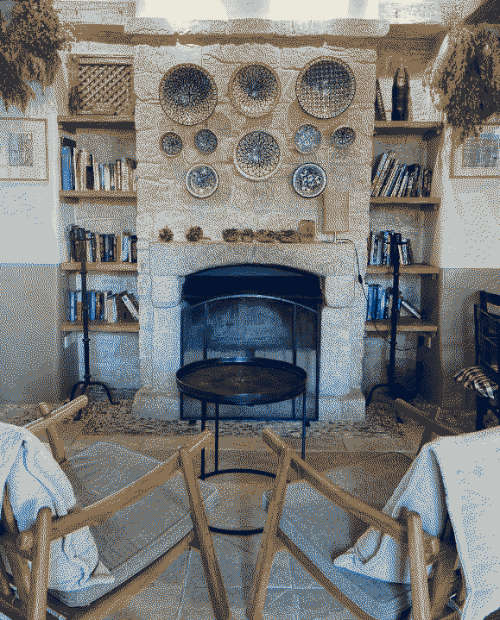
Today we are in Lofou, a small village located 20 minutes north of Paramytha. It is another dreamy place that has preserved its beautiful stone architecture. In the café-restaurant that we sit at, a calm and cool atmosphere gives peace. We are surrounded by books, ceramics, dried plants, wood, art, the blue sky, and a green garden.
I have Javier Darío Restrepo’s Pensamientos: Discursos de ética y periodismo with me, which I read from a beautifully and simply designed armchair. Pensamientos reminds me of home. Life feels joyful.
And yet, whenever I pull up a map, I am reminded that we are now just off the coast of Lebanon. Perhaps an hour-long flight from Gaza. If I zoom out, I notice that we are on the same longitude as Ukraine, we share the same time zone.
I was born surrounded by violence. In Bogotá, you are always on your guard, even if the city is safer now than what it used to be, and a whole lot safer than what other parts of Colombia are still like today. Being here now, in this idyllic village, the contrast feels stark.
During a brief period in my early adulthood, (outright) war between nations went from feeling unthinkable to almost inevitable. I know this isn’t true, violence and injustice have been and continue to be ever-present. The turn of the century was incredibly bloody for Colombia with the "war on drugs." But it does feel that now there has been a broader mental shift: that before war and violence were somehow more unacceptable globally, and so different actors undertook violence in slyer and stealthier ways. Political discourse around military attacks and violent action was not so forthright. Some people may say, as has been said about Trump, “at least they’re being honest now, showing their true colors.”
However, I disagree. I think that the fact that a full-scale war was “unthinkable” for many people was a good thing. The fact that we have mental red lines is important, even if humanity does not always live up to these standards. To me, the goal should be to denounce and expose the ways governments, businesses, and individuals get around what is deemed just or right, and the ways in which hypocracy takes shape. We should hold leaders accountable for lofty speech promoting peace and tolerance, make them meet the standard, instead of giving in and making war and violence an “acceptable” and “inevitable” part of our everyday in the name of "honesty."
For a long time, I’ve felt a natural pull towards pacifism. However, I understood well the people who critiqued it, we need to defend ourselves from those who commit harm after all, don’t we? We need to be able to fight back, right? What’s the alternative?
While I don’t have any answers, I have realized I need to listen to that instinct that protests against violence, conflict, and war. It is an instinct that has been coupled with a life-long interest in literature and art that expresses and describes the ravages of systematized violence: from Primo Levi, Tim O’Brien and Harper Lee to Maryse Condé, Alain Resnais, and Isabel Allende. It was first the memoirs from Holocaust survivors followed by the accounts of the military dictatorships in South America and then the testimony of the brutality of slavery in the Caribbean that have over time constructed my conviction in justice, freedom, and accountability, but also at the same time, for nunca más.
“Never again” is always associated with World War II, but in Colombia, never again continues to be called for even as Colombians continue to suffer and die every day due to ongoing violence. Our “armed conflict” is unique in the way that the categories of victims and victimizer are not always so neatly separated. It is as the writer Rodolfo Celis Serrano describes in his autobiographic short text on life in the Usme neighborhood of Bogotá: there are things that he did while living under the threat of violence that still bring him shame and guilt. Celis was displaced from his home, a victim of the armed groups that took over the territory, and yet he himself complicates the category of “victim” by highlighting his own guilt. In Colombia, we have to reckon with reintegrating combatants and civilians of all types into peaceful communal living, while at the same time trying to balance this with the pursuit of justice and accountability.
And there are so many Colombian thinkers, artists, and activists that have been working through the inherent paradoxes of prolonged systemic violence for years.
One of them was Javier Darío Restrepo, who I am currently reading. For my next log entry, I want to reflect on Restrepo’s writing along with the work of Jean Giono, another author who I also read and rediscovered this month.
Their writing has given me much to think about what peace means, as real action and not just a “utopian” concept. In their writing, I’ve found that same visceral rejection to war and violence that I feel—that war is senseless at its core, even with all the justifications that we try to dress it up with. In their writing, I’ve also confirmed that this rejection of war does not entail sacrificing strong convictions about rights and wrongs, it doesn’t equal apathy or “neutrality” in the face of cruelty, injustice, and inhumanity.
“El carácter del conflicto, su prolongación en el tiempo, la complejidad y multitud de los elementos en juego, el constante juego de la desinformación—que no es accidental sino parte de la táctica guerrera—, crean una atmósfera de confusión tal que la gente muere todos los días sin saber por qué muere”. – Javier Darío Restrepo, Pensamientos (p. 221)
« Il faut sinon se moquer, en tout cas se méfier des bâtisseurs d’avenir. Surtout quand pour battre l’avenir des hommes à naître, ils ont besoin de faire mourir des hommes vivants. » – Jean Giono, Refus d’obéissance (p. 14)
- Andrea
29.09.2024 // Wonderment at Kalopanagiotis
Paramytha, Cyprus ⬔
Only 24 hours ago we were there: tucked away in the tight valleys of the Troodos (Τρόοδος) mountains, traversing twists and turns under a brilliant blue sky and the gaze of tall pines. Villages hung from the mountainside, and one of these was Kalopanagiotis (Καλοπαναγιώτης).
Of the high highs and low lows that have characterized my first few days on Cyprus, Kalopanagiotis is literally and figuratively a very high high. The drive up from the southern coast into the mountains offers views that words do little justice to. Near Mount Olympus, the highest peak of the island, the view of the northern coast appears, and Cyprus suddenly feels small again, like when seen on a map for the first time. It is a unique feeling to reach a mountain peak and to be able see the physical constraints that the sea places on land. It’s so different from the huge, continental places I grew up in that felt boundless.
I first discovered this feeling of "boundedness" in Guadeloupe, which despite its very small size on the map felt bigger than Cyprus. I think it probably is, given the way maps distort landmasses. In any case, I still remember that feeling, on my first visit to Terre-de-Haut in the archipelago of Les Saintes, when I climbed up to the highest peak and realized that I could see the entire island from there, all around me. A few months later, I re-encountered "boundedness" in Saint Cloud. From the slopes of the Soufrière volcano, I looked out and down onto the coast on which I lived, walked, and worked everyday. While the view of the sea provides a sense of vastness that is familiar to me, seeing the long but limited coast so perfectly drawn out made the feeling of boundary visceral.
But back to Kalopanagiotis, which meant to dive back down into the earth after circling the peak of Mount Olympus. Kalopanagiotis hugs the curve of a valley that cradles a small creek lush with vegetation. Now, instead of looking down, I found myself looking up a lot, at the peaks, the sky, the buildings and streets above us. The awe of the mountain peak had given way to the intimacy of the valley.
Despite the smallness of the village, it felt like there were not enough hours in the day to stroll through its narrow roads and river paths, once, twice, thrice. Kalopanagiotis is penetrated by history, with its Byzantine artwork and archaeological remains of monasteries, baths, and water mills. At the same time, local businesses are vibrant and include a winery, artisanal stores, fusion restaurants and more. Nature, archaeology, art, and the culinary arts—I couldn’t ask for more.
But when I try to capture the wonderment that I felt, I am reminded how insufficient words often are. There is no list of attraction detailed enough to really capture that feeling.
I would have to resort to art, rather than a log entry (What’s the difference? Can’t anything be art? But there is a difference, I can feel that there is.), to piece together that joy of discovering someplace beautiful, new, and already nostalgic.
- Andrea
29.09.2024 // Pour-over | First attempt
Paramytha, Cyprus ⬔
Beans
Tesfaye Coffee from Ethiopia. Vendor lists notes of strong fruits and jasmine.
Equipment
- Coffee: Ethiopia Tesfaye, 20 grams, medium ground.
- Water: 320g tap water
- Equipment: kettle, pour-over brewer, filters, scale
Method
1. Rinse the filter, pour out the excess water
2. Pour 20g grounded coffee, shake gently to level.
3. Pour first 50g of water in a circular motion, wait 30 secs.
4. Pour second 150g in a circular motion, wait 10-20 secs.
5. Shake gently to level.
6. Pour last 120g, totaling 320g
7. Shake gently to level.
8. Wait for pour over to complete
Observations
- The filter flops over and is unstable, potentially hindering the water flow.
- Water was just beginning to boil before use.
Results
- Lack of aromatic profile, no smell.
- Andrea observed bitter tones.
- Marc observed overall delicate flavor with floral notes, not too strong.
Conclusions
The goal is to brew for coffee with less bitterness and more aroma. Variables we can tweak are:
- Temperature of the water.
- The tap water.
- The spiral pouring technique.
- The filter used.
- Altering ratio of water to coffee ground.
- The amount of pulses and the pauses between the pulses.
We also recognize that some of the limits are due to the equipment.
- Marc & Andrea
26.09.2024 // Halfway Across the World
Limassol, Cyprus ⬔
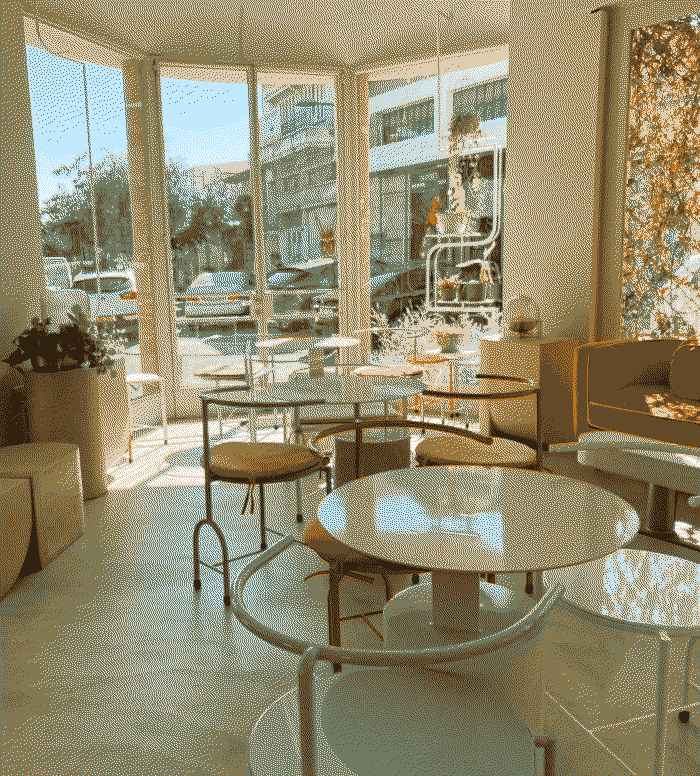
We arrived in Cyprus almost exactly one week ago. Today, I sit at a café in Limassol, looking out at the lively sunny street near the center of town, and I feel as if I had only just arrived. As if newly landed.
Like any change, moving always requires effort, usually new and unusual sorts of effort. After a lifetime of moving from here to there, I like to think that I have strategies in place to help me in these moments of transition. And yet, it can be hard, and it has been hard.
The countryside of a new country has special surprises, especially for city people, and I realize more and more that I am city person—despite my love for hiking and nature. Encountering sand flies for the first time, a drought for the third time this year, and challenges in transportation, all while coming down with a cold, is not too much fun. Even if we expected some challenges (like the transportation one), there's no way to sugarcoat the truth, it’s been tough.
I also realize how much I cherish self-sufficiency, which is to say my independence. Not being able to address challenges from the get-go due to feeling unwell and not knowing how things worked made me feel trapped.
And yet, things have slowly fallen into place, with some patience and initiatives to put things in order. Now, it feels like life is ready to begin again.
This experience made me reflect on some other challenging moves I've gone through, two of which were even more challenging. Moving to Paris, for one, and also Vieux-Fort in Guadeloupe (another island) tested me in more ways than one. Stockholm was also tough in the first three days, but overall, less tough than the first week of Paramytha. Even with those rough starts, I've yet to regret moving someplace new (even with new challenges that appear, like the COVID-19 pandemic while I was in Guadeloupe) and I hope this holds true for Paramytha, Limassol, and Cyprus generally.
- Andrea