Articles & Essays
Favorites
- Century-Scale Storage (Maxwell Neely-Cohen). If you had to store something for a hundred years, how would you do it?
- Helen's Exile (Albert Camus). A contemplation of modernity, limits, beauty, and balance that rings deep into the anthropocene.
- The Loss of the Creature (Walker Percy). Why is it almost impossible to gaze directly at the Grand Canyon and see it for what it is?
- What is it Like to Be a Bat? (Thomas Nagel). On the (perhaps) impossible endeavour of scientifically understanding the mind, our own & that of others.
Log Entries
28.02.2026 // Curriculum as Manifesto
Valencia, Spain ⬔
Amidst the echoing calls proclaiming the end of times that overlap and jostle with the daily directives and imperatives from the workplace and the marketplace to keep things ticking, I have read some of the best writing and I have seen some of the best films, and I have had some of the best conversations strolling through Valencia's carrers cuadriculados, Madrid's ups and downs, and even across screens. The flowers are blossoming much too soon and I with them.
I also can't seem to shake off this mania for associating everything with everything else, Italo Calvino with Thomas Nagel, Simone Weil with E.M. Forster and the Dalai Lama. I keep coming back to these constellations forming in my mind, that link together disparate pieces of humanity and that I can't help but find beautiful. I have fun picking up each piece, turning them over, admiring them, and then placing them next to each other, and then switching the order around, as if they were cards shuffled into a deck. Or the stones and sea shells that make up my rock collection.
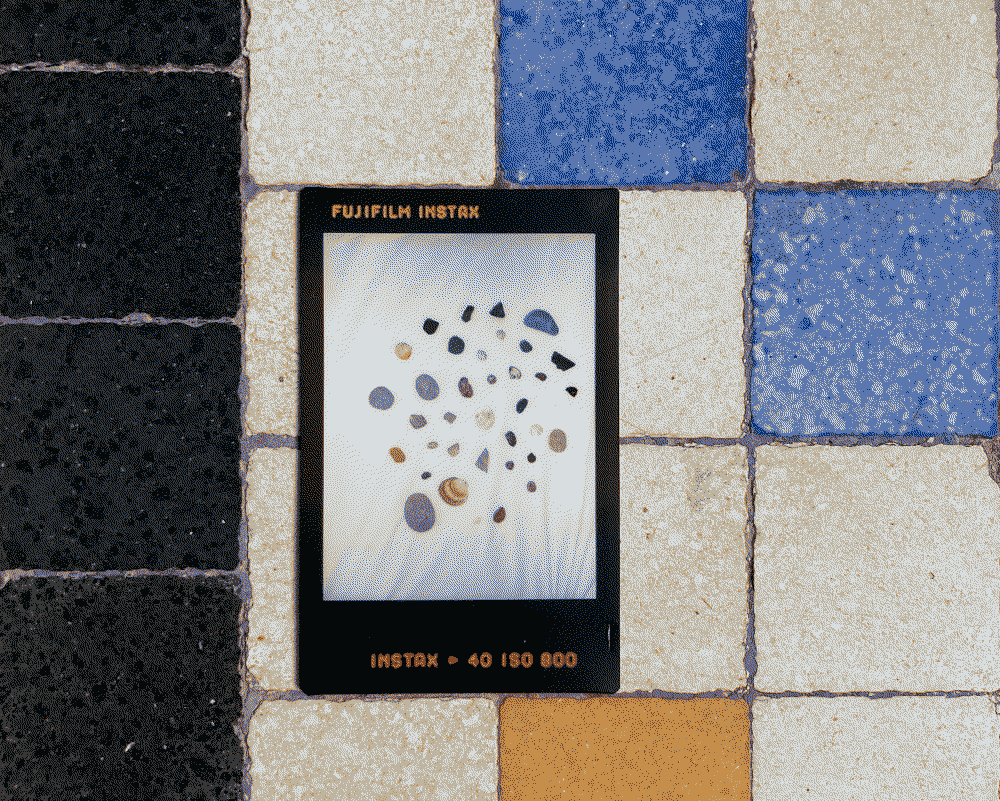
I have often heard that academics dislike teaching because it takes time away from research, but I can't imagine anything funner than having the freedom to put together a curriculum. Now, freedom might be the key word here, since many professors and instructors do not feel free. They are instead compelled to teach things following a pre-ordained sequence: 19th Century British Literature, World History, Introduction to Astronomy. In his essay, "The Loss of Creature", Walker Percy posits that the classroom setting is destined to kill any of the life and spark to be found within a given subject of study. And maybe that's true when lessons and their contents are stuffed together into a semester without care. But I also believe that a curriculum can be such a powerful vector for discovery, play, and reflection. There are some curriculums that, like picking up a pair of binoculars or looking through a microscope for the very first time, have changed my life.
When I was seventeen, I chose my future university based on a curriculum. As lost as I was at the time, I sensed that there was something special about the year-long residential program, Structured Liberal Education (SLE). Over a decade later, I continue to revisit the films, books, poems, and essays that I discussed, loved, barely understood, just skimmed, during SLE. It's a program that has been critiqued and questioned with cause. But I have never found SLE's Western European focus to be a reason to shut it down, rather it is a reason to make many more and different SLEs that feature other texts, other films, other faiths. A curriculum will always be exclusionary and limited and incomplete. I have seen many excellent teachers agonize over this—how to balance the quantity of readings, the limited time of a semester, the almost boundless scope of any truly interesting subject matter, the obligation to evaluate and grade. In my ideal curriculum, I would start by discarding the element of evaluation/grading and then, I would consider that which is perceived to be a weakness (i.e., the limitations imposed by time and attention) to be instead the strength of the lesson plan. Crafting a great curriculum really is an exercise in curation, like setting up an exhibition in a museum or gallery. These limitations, where we decide to start and stop, are what make a journey possible. And there should never be just one type of journey in life, but many different sorts of journeys, charted by all sorts of people.
The curriculum that has been coming together in my mind over the course of the first weeks of 2026 has a lot to do with technological angst of our times. It was not something I set out to do when I picked up the novels, essays, and fragments that have inspired me, which is why I also think it is a curriculum that quickly outgrows the concerns of the times and invites the type of questions that all great works of art contain within them, which are the unanswerable ones.
Driven Out of Our Minds: a mini-curriculum for 2026 and beyond
(work in progress)
- Foucault's Pendulum by Umberto Eco
- "The Nightmare That Is a Reality" by Arthur Koestler
- "The Machine Stops" by E.M. Forster
- "Tracing a Headland: An Introduction" from Wandurlust: A History of Walking by Rebecca Solnit
- "Reflections on the Right Use of School Studies with a View to the Love of God" from Waiting for God by Simone Weil
- "La liberté absurde" from The Myth of Sisyphus by Albert Camus
- "Material Culture and the Absence of Ritual" from Don't Sleep There are Snakes by Daniel L. Everett
- "What is it Like to Be a Bat?" by Thomas Nagel
- The Metamorphosis by Franz Kafka
- "The Spiral" by Italo Calvino
Honorable Mention to The Analog Sea Review (No.4), an offline journal that illustrates the power of careful curation; I picked three of the texts above from this volume.
- Andrea
27.11.2025 // An Anthology of Brazilian Literature
Rabat, Morocco ⬔
Between October and November, I have read a couple of really great books and I have been meaning to write about them, but I think I will give up on the monthly review structure. I should really just write about a book when I am excited to do so, otherwise it becomes a bit of a chore. There are also some books that take a while to digest, like Albert Camus' The Myth of Sisyphus, which in many ways I am always writing about nowadays.
Something that is a bit easier to put on paper is a list of the wonderful stories that I encountered in an old anthology of Brazilian literature. I already dedicated one entry to a Machado de Assis story that really delighted me. I also mentioned Rubem Braga at some point. Now, here is the full list of the stories and authors that have stayed with me long after completing the whole book:
- "Um apólogo" de Machado de Assis
- "Festa" de Graciliano Ramos
- "História do Carnaval" de Jorge Amado
- "As mãos de meu filho" de Érico Veríssimo
- "Circo de coelhinhos" de Marques Rebêlo
- "Brinquedos incendiados" de Cecília Meireles
- "Gato, gato, gato" de Otto Lara Resende
- "Céu limpo" de Eduardo Campos
- "A aranha" de Orígenes Lessa
- "Uma vela para Dario" de Dalton Trevisan
And as a bonus...
Some other September + October Reads
- "Charulata: 'Calm Without, Fire Within'" by Philip Kemp
- "Patricia Lockwood Goes Viral" by Alexandra Schwartz
- "Highjump as Afrofuturism" by Gustav Parker Hibbett
- "Reading the Greeks Under a Blanket of Blue" by William Coleman
- "Fallen Fruit" by Don Mattera
- "When the Montuno Hits in Hong Kong: My Journey into Canton Mambo" by Gia Fu
- Andrea
01.10.2025 // Helen's Exile
Cape Town, South Africa ⬔
After an early start to the day and to the month of October, we sat down with one of the essays of Albert Camus, "Helen's Exile". It proved to be especially lovely, melancholic and thought-provoking on a grey rainy day like today, and Camus' literary flair is always awe-inspiring. We picked out a few of our favourite quotes, some of which can make confronting current events feel less lonely, and some of which speak to some of the other reflections posted on Comma Directory recently.
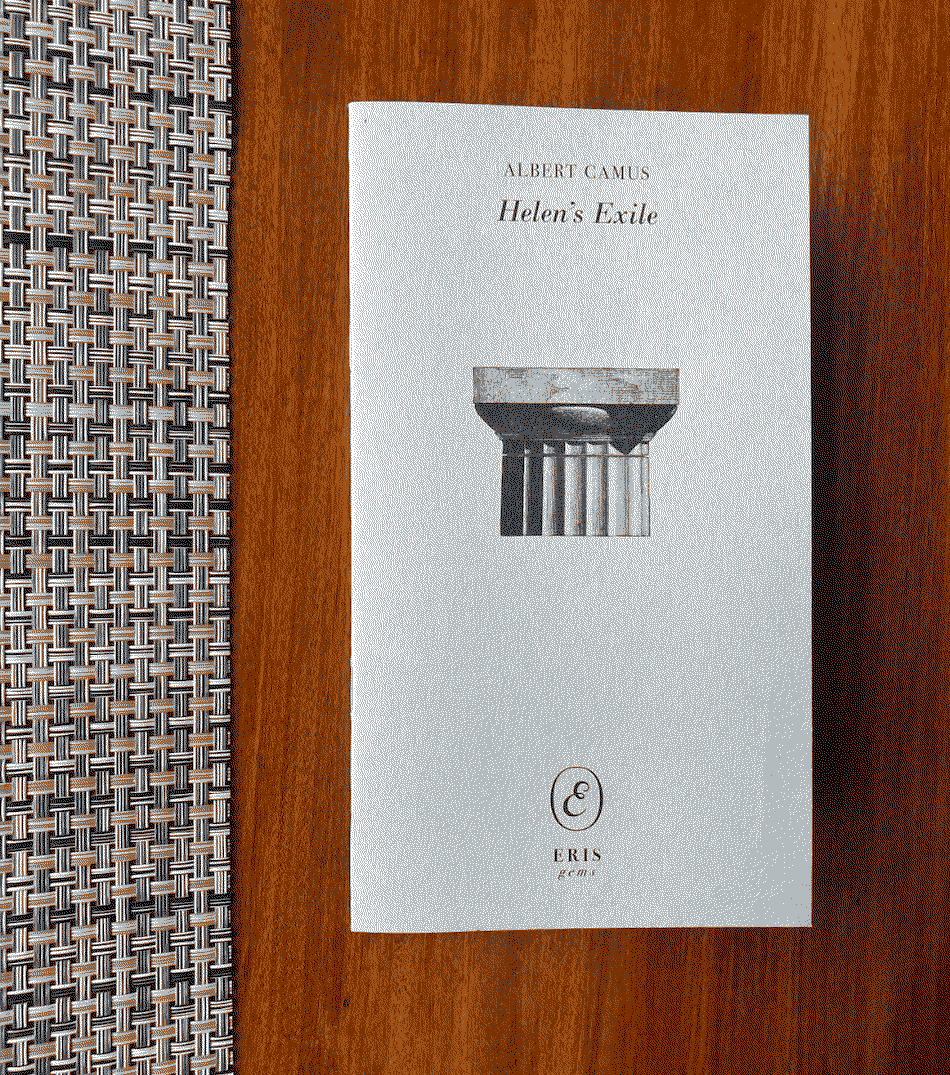
"Our Europe [...] off in the pursuit of totality is the child of disproportion."
"In her madness she extends the eternal limits, and at that very moment dark Erinyes fall upon her and tear her to pieces. Nemesis, the goddess of measure and not of revenge, keeps watch. All those who overstep the limit are pitilessly punished by her."
"In a drunken sky we light up the suns we want. But nonetheless the boundaries exist, and we know it."
"In our wildest aberrations we dream of an equilibrium we have left behind, which we naively expect to find at the end of our errors."
"We, too, have conquered, moved boundaries, mastered heaven and earth. Our reason has driven all away. Alone at last, we end up by ruling over a desert."
"Whereas the Greeks gave to will the boundaries of reason, we have come to put the will's impulse in the very centre of reason, which has, as a result, become deadly."
"Nature is still there, however. She contrasts her calm skies and her reasons with the madness of men. Until the atom too catches fire and history ends in the triumph of reason and the agony of the species."
"But the Greeks never said that the limit could not be overstepped. They said it existed and that whoever dared to exceed it was mercilessly struck down. Nothing in present history can contradict them."
"The historical spirit and the artist both want to remake the world. But the artist, through an obligation of his nature, knows his limits, which the historical spirit fails to recognise. This is why the latter's aim is tyranny whereas the former's passion is freedom."
"[Our era] wants to transfigure the world before having exhausted it, to set it to rights before having understood it."
"Whatever it may say, our era is deserting this world."
"Yet what a temptation, at certain moments, to turn one's back on this bleak, fleshless world! But this time is ours, and we cannot live hating ourselves."
"Admission of ignorance, rejection of fanaticism, the limits of the world and of man, the beloved face, and finally beauty—this is where we shall be on the side of the Greeks."
- Andrea & Marc
24.07.2025 // Thinking of Stonehenge in Manhattan
New York City, United States ⬔
The past four weeks have taken me from Bath to London to New York, New Jersey, and Pennsylvania—leaving me with just enough time to catch my breath. Amidst the hustle and bustle, I had a few parting thoughts that have stuck with me about a small day trip we did in England, thoughts which are broadly pertinent to travel and living generally.
Shortly before leaving the UK, we went to Stonehenge and it brought me back to a younger self who was just beginning to discover the world. Up to the very day we went, I had doubts about whether to make the trip over. It is a busy time as we approached the end of our visit to Bath. Lots of travel awaited, and as travel accumulates in my past and future, I begin to enjoy static moments more and more.
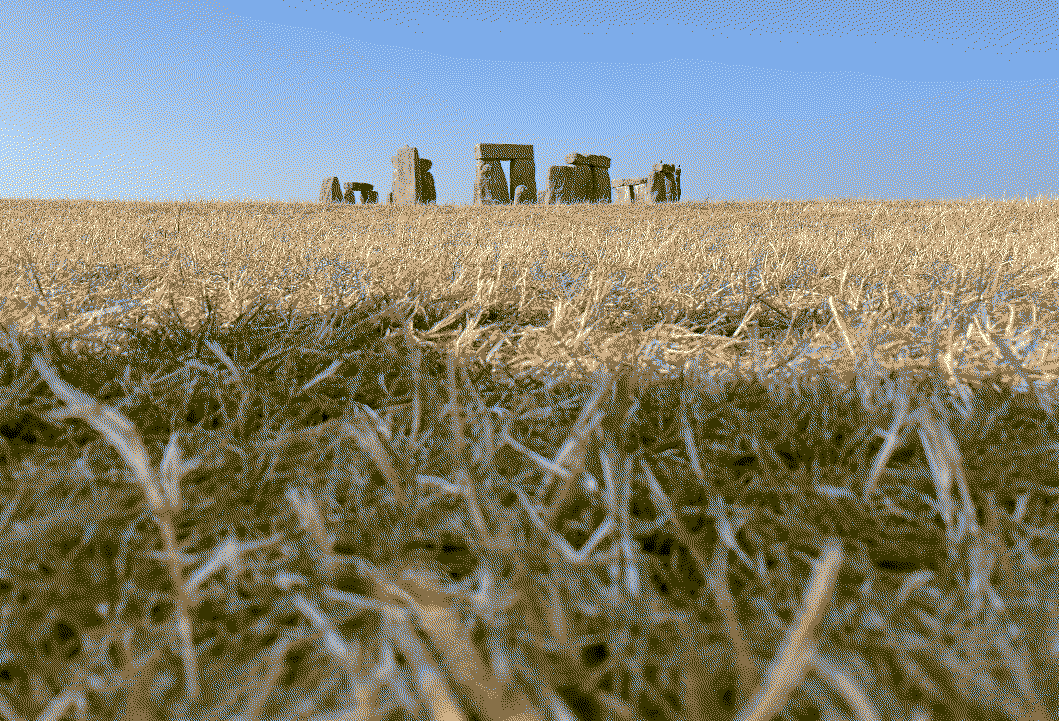
Nonetheless, the clutter of logistics, work, and everyday tasks can also cloud vision. In the end, how could I not go? The site was less than two hours away and there are no guarantees I will ever have the chance to see it again. The awareness of a present both fleeting and latent with possibility is something that has always characterized my outlook on life. And yet, there are so many forces in our every day that increasingly try to obscure the value of experiencing, living, contemplating. Deciding to go to Stonehenge was a reassertion that each day and each minute is not to be taken for granted.
Beyond the inertia of banality, there is also cynicism: why go? Isn't it just an overhyped commercialized sort of place? These are the whispers and judgements that try to chip away at the value of something because it is too popular, too well-known. I know that my younger self was almost deaf to this type of cynicism. After being denied mobility and possibility for so long, the inherent of value of discovering and exploring and learning and experiencing seemed too obvious. It is this instinct that has driven me to go rogue on trip itineraries, like that time I refused to leave Istanbul without visiting the Hagia Sophia and the Blue Mosque. Today, I am proud that at sixteen I had the foresight to do that; I haven't been back to Istanbul since.
In Walker Percy's "Loss of Creature", the author reflects on how modern institutions, such as school or mass tourism, and the expectations we develop as a result of being embedded in them, alienate us from that which we wish to encounter and access. Percy toys with ideas on how to reclaim experience, eluding cliché, disappointment, and cynicism. Growing up, the inherent value of experiences revealed itself to me as an obvious contrast to the relative scarcity, constraint, and struggle I had had to live through. As my access to the world has swelled, have I lost sight of this?
The special feeling that still springs within, whether at the foot of Stonehenge or on the crisscrossing streets of Manhattan, makes me think not. I still feel like the luckiest person in the world, just like when I saw the rising domes of the mosques in Istanbul or the black sand volcanic beaches of Guadeloupe—-the drive to live is still there, even if I have to make a greater effort to tear down some of the pressures and expectations that adult life has brought with it.
- Andrea