Film | Reviews
05.03.2026 // Notorious
Valencia, Spain ⬔
Last night, we watched Alfred Hitchcock's Notorious (1946). I became aware of this film thanks to Guillermo del Toro's Criterion Closet picks. I then added it to my watchlist, I told Marc about it, we watched the trailer, it left a vague impression on us both, but nonetheless, one thing led to another and we were suddenly watching the film on a weeknight. Without too many expectations, unable to gauge whether it fell closer to The Man Who Knew Too Much or to Vertigo within Hitchcock's filmography, it was us who fell into the path of this film.
I think I was hoping for something more like Rear Window, really. But what did Notorious end up being instead? (Spoilers ahead)
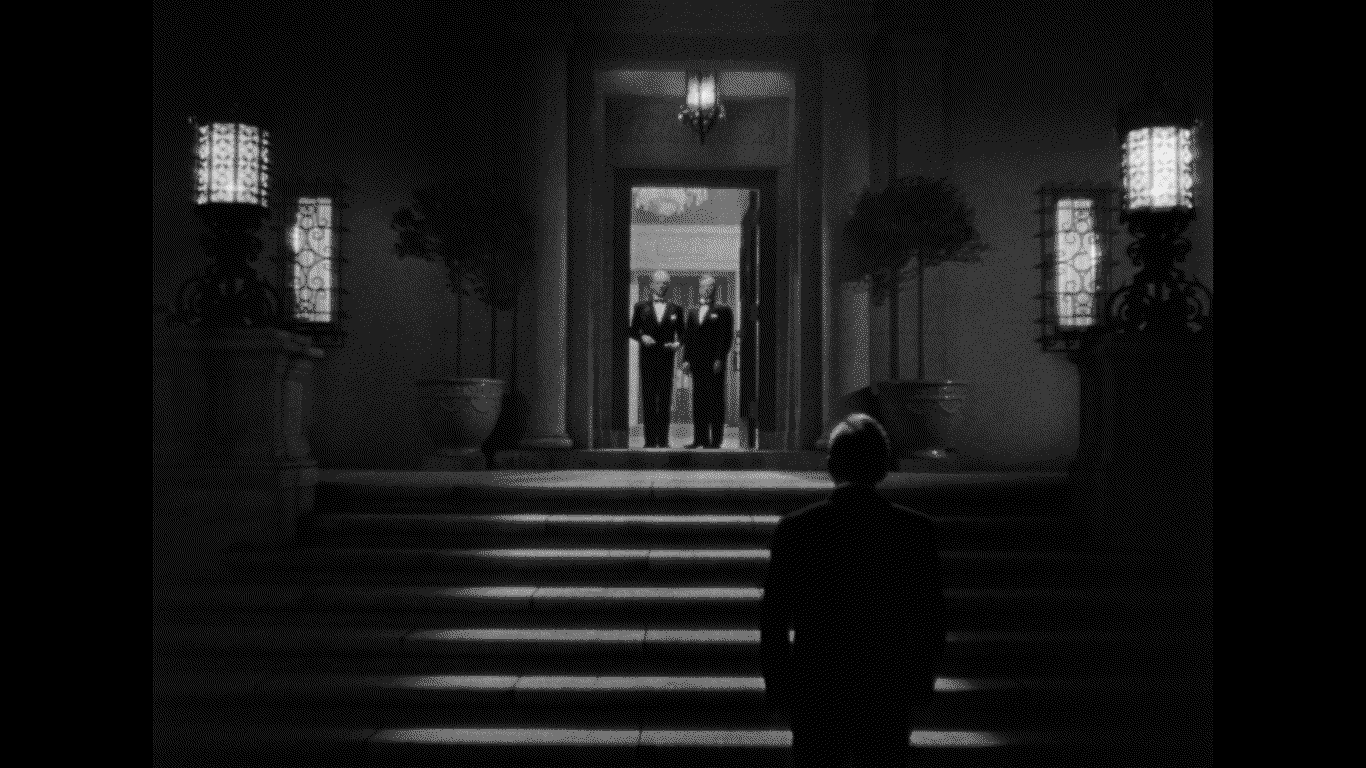
Notorious seems to me now like the bits and pieces of space rock you encounter in the vacuum of space. Miami. Treason. Alcohol. Secret Agents. Rio de Janeiro. Nazis. Lust. The first thirty minutes or so of the film are like stumbling across an asteroid field that scrapes and crumbles against your mind. The result is like collage or collision. And from this mishmash of seemingly unrefined pieces that have come together, a sort of gravity emerges and begins to take ahold of us. The fragments lose their sharp edges as they begin to coalesce into a mass, gaining cohesion and density as our protagonist Alicia goes undercover, sinking deep within a secretive community of German expats in Rio, so obviously out of her depth. At this point, we are wholly captured within Notorious' gravitational field, spinning faster and faster in orbit as secret cellars come into view and keys appear and disappear. A man has been killed, love has been made, all out of view, obscured and contained within a film which leverages the constraints imposed by the Hays Code to shape itself into something dark, heavy, and true, like a spinning mass that has suddenly become so dense that it has no choice but to collapse onto itself. What more could Alicia's epiphany be at that moment in which the poison-induced visions reveal to her the horrible truth we have already anticipated and known? Like witnessing from within a slow motion car crash. Having failed to reach escape velocity, we cross the event horizon into the final ten minutes of the film. The tense escape down the staircase, past the Nazi conspirators, and out the door, fails to feel like an escape at all. Instead, we follow Sebastian back up through the illuminated doorway of the mansion in which he will be killed by his associates and the door shuts close behind us.
- Andrea
10.08.2025 // Back to the Basics with Short Film
Cape Town, South Africa ⬔
During my recent trip to New York City, a friend invited me to the IFC Center to watch this year's Sundance Shorts Tour. This screening is the latest in a series of unexpected encounters with short film that have popped up throughout my travels in the past year. Wherever I go, it seems like there is some sort of short film festival or screening going on. I have also begun to cross paths with aspiring and emerging directors, and it has been fascinating to gain some insight on the current challenges and opportunities within the discipline. In a way, it is all very fitting. When I first began to wade into the world of film nearly ten years ago, my point of entry was a short film: Chris Marker's La jetée, which has haunted me ever since.
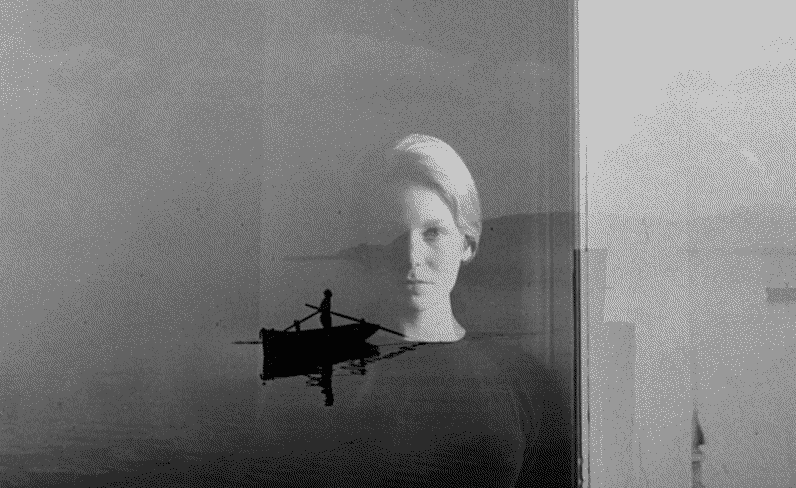
I want to reflect on this yearlong impromptu journey into short film by featuring some of my personal highlights and what has made these films so memorable.
Bright Lights (2019) by Charby Ibrahim
A short documentary film on gambling and addiction, animated in the bright flashing lights of slot machines, that communicates the despairing ease with which compulsion takes over the human brain. The white outlined figures on the black background are eery; the animation manages to convey the way in which addiction can hollow out a life. It is a film I find myself coming back to, and that I think about a lot in relation to the rise of design elements in games and social media that draw inspiration from casinos.
Bogotá Story (2023) by Esteban Pedraza
I stumbled upon this short fiction film by chance and it turned out to be one of the most meaningful encounters I had with an artwork in 2024. It brings the Bogotá of the 90s back to life with an attention to detail that is astounding. It almost felt like the visual quality of the film mirrored that of my own childhood memories: from the color palette of greens, brick oranges, and blues to a dark shadowy quality of a city often overcast. Not only am I not used to seeing my hometown depicted on film, but seeing it reconstructed with so much care was touching. This care contrasts in a powerful way with the violence that simmers just below the surface throughout most of the film, foreshadowing tragedy.
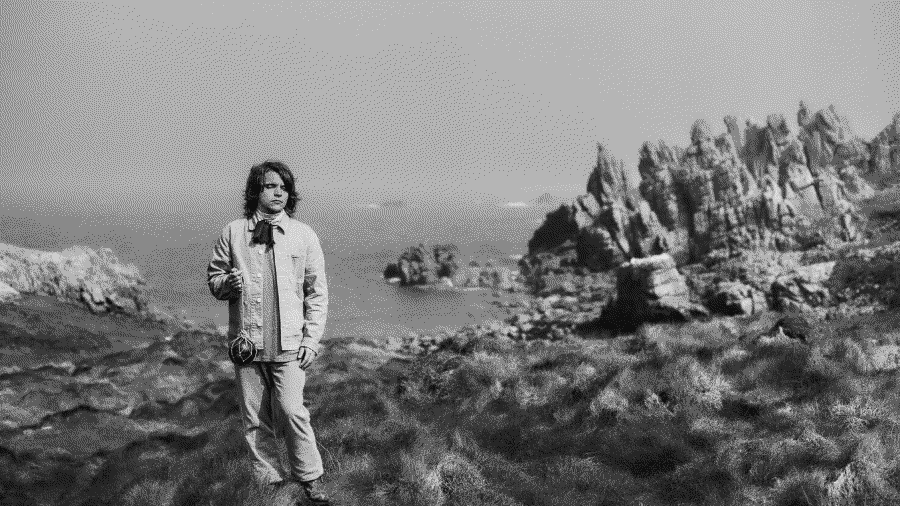
De Blinden (2023) by Michiel Robberecht (International Short Film Festival of Cyprus)
When I saw this odd fictional short in the Rialto in Limassol, I did not know what to make of it. A town full of blind inhabitants, a temporal setting that could be the past or some sort of future, a mysterious threat that may or may not exist. It was very different from all the other films screened that day at the festival. Shot in black and white, there is a compelling play of shadow and light that gives the film a mythical feeling. Ultimately, De Blinden made me think of Ingmar Bergman's The Seventh Seal and David Bowie's last album, ★ (Blackstar), which are not uninteresting evocations.
We Were The Scenery (2025) by Christopher Radcliff (Sundance Shorts Tour at the IFC Center)
I must make a somewhat embarrassing confession now: I have never watched Apocalypse Now. It is one of those classics that I have not gotten around to watching, but that I have been wanting to. I mention it now because We Were The Scenery is a mini documentary of the Vietnamese refugees that were casted as extras in the film. Apparently, Coppola's film crew arrived at a refugee camp in the Philippines and swept everyone up to be part of the film. We Were The Scenery is the testimony of one couple, Hoa Thi Le and Hue Nguyen Che, and their difficult relationship with Apocalypse Now and the war-torn past that haunts them. Even now, I remember the feeling of sitting in the theater and realizing how messed up it was to have victims of war recreate the very same war that they were running away from. It was a strong commentary on filmmaking through the lens of another filmmaker. In a way, I am glad I got to see Hoa Thi Le and Hue Nguyen Che's version of the story first, of what it truly meant to survive the Vietnam War.
Hurikán (2024) by Jan Saska (Sundance Shorts Tour at the IFC Center)
I will close out my list with another animated short, Hurikán. Having lived through a few hurricanes, I believe this film is aptly named. The pacing of the animation is great in the way it alternates between moments of suspense and anticipation with high energy impact scenes that tear through Prague. The effect was also perhaps heightened by the fact that it followed right after We Were The Scenery and I was still a bit teary eyed when the pig headed protagonist burst into the scene. I really enjoyed how the film played with the slapstick conventions of cartoon, while still managing to transcend those conventions.
Other Short Films Watched
- Susana (2025) by Gerardo Coello Escalante and Amandine Thomas
- Grandma Nai Who Played Favorites (2025) by Chheangkea
- Les talons de ma mère (2025) by Lili Cazals
- Percebes (2024) by Laura Gonçalves and Alexandra Ramires
- La Cascada (2024) by Pablo Delgado
- Minha Mãe é Uma Vaca (2024) by Moara Passoni
- Grave (2023) by Martin Tunnicliffe-Squirrell
- Love Is Blind (2018) by Dan Hodgson
- L'homme qui plantait des arbres (1987) by Frédéric Back
- Junkopia (1981) by Chris Marker
- Whiplash (2013) by Damien Chazelle
- Andrea