Curriculum as Manifesto
Amidst the echoing calls proclaiming the end of times that overlap and jostle with the daily directives and imperatives from the workplace and the marketplace to keep things ticking, I have read some of the best writing and I have seen some of the best films, and I have had some of the best conversations strolling through Valencia's carrers cuadriculados, Madrid's ups and downs, and even across screens. The flowers are blossoming much too soon and I with them.
I also can't seem to shake off this mania for associating everything with everything else, Italo Calvino with Thomas Nagel, Simone Weil with E.M. Forster and the Dalai Lama. I keep coming back to these constellations forming in my mind, that link together disparate pieces of humanity and that I can't help but find beautiful. I have fun picking up each piece, turning them over, admiring them, and then placing them next to each other, and then switching the order around, as if they were cards shuffled into a deck. Or the stones and sea shells that make up my rock collection.
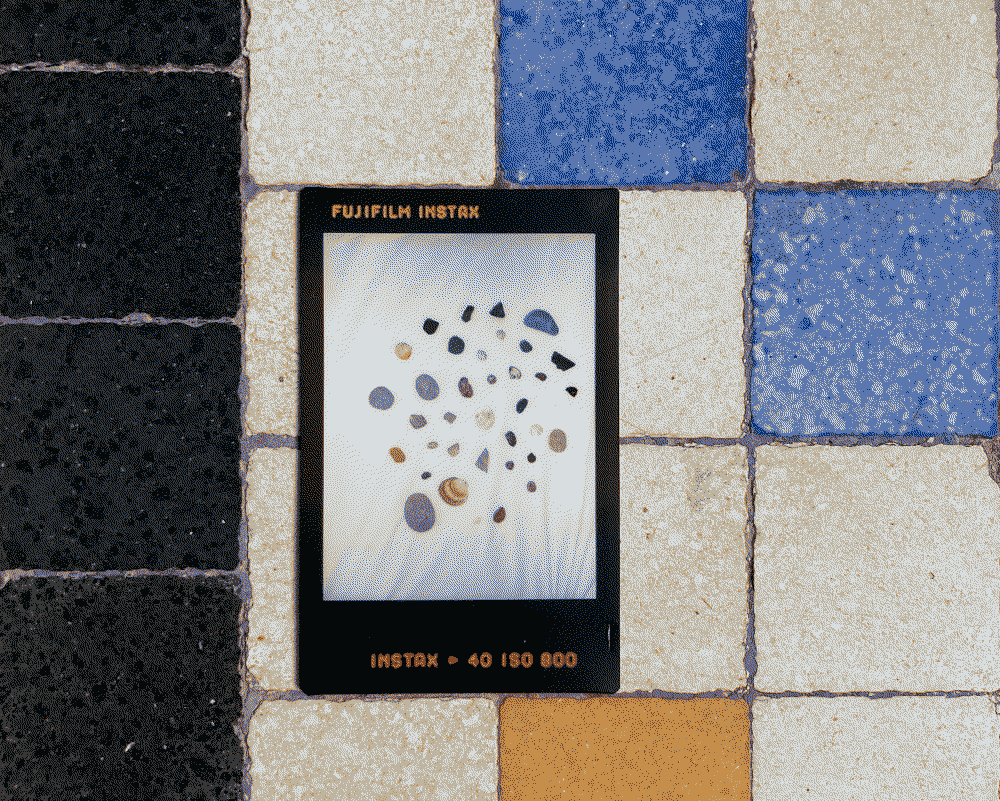
I have often heard that academics dislike teaching because it takes time away from research, but I can't imagine anything funner than having the freedom to put together a curriculum. Now, freedom might be the key word here, since many professors and instructors do not feel free. They are instead compelled to teach things following a pre-ordained sequence: 19th Century British Literature, World History, Introduction to Astronomy. In his essay, "The Loss of Creature", Walker Percy posits that the classroom setting is destined to kill any of the life and spark to be found within a given subject of study. And maybe that's true when lessons and their contents are stuffed together into a semester without care. But I also believe that a curriculum can be such a powerful vector for discovery, play, and reflection. There are some curriculums that, like picking up a pair of binoculars or looking through a microscope for the very first time, have changed my life.
When I was seventeen, I chose my future university based on a curriculum. As lost as I was at the time, I sensed that there was something special about the year-long residential program, Structured Liberal Education (SLE). Over a decade later, I continue to revisit the films, books, poems, and essays that I discussed, loved, barely understood, just skimmed, during SLE. It's a program that has been critiqued and questioned with cause. But I have never found SLE's Western European focus to be a reason to shut it down, rather it is a reason to make many more and different SLEs that feature other texts, other films, other faiths. A curriculum will always be exclusionary and limited and incomplete. I have seen many excellent teachers agonize over this—how to balance the quantity of readings, the limited time of a semester, the almost boundless scope of any truly interesting subject matter, the obligation to evaluate and grade. In my ideal curriculum, I would start by discarding the element of evaluation/grading and then, I would consider that which is perceived to be a weakness (i.e., the limitations imposed by time and attention) to be instead the strength of the lesson plan. Crafting a great curriculum really is an exercise in curation, like setting up an exhibition in a museum or gallery. These limitations, where we decide to start and stop, are what make a journey possible. And there should never be just one type of journey in life, but many different sorts of journeys, charted by all sorts of people.
The curriculum that has been coming together in my mind over the course of the first weeks of 2026 has a lot to do with technological angst of our times. It was not something I set out to do when I picked up the novels, essays, and fragments that have inspired me, which is why I also think it is a curriculum that quickly outgrows the concerns of the times and invites the type of questions that all great works of art contain within them, which are the unanswerable ones.
Driven Out of Our Minds: a mini-curriculum for 2026 and beyond
(work in progress)
- Foucault's Pendulum by Umberto Eco
- "The Nightmare That Is a Reality" by Arthur Koestler
- "The Machine Stops" by E.M. Forster
- "Tracing a Headland: An Introduction" from Wandurlust: A History of Walking by Rebecca Solnit
- "Reflections on the Right Use of School Studies with a View to the Love of God" from Waiting for God by Simone Weil
- "La liberté absurde" from The Myth of Sisyphus by Albert Camus
- "Material Culture and the Absence of Ritual" from Don't Sleep There are Snakes by Daniel L. Everett
- "What is it Like to Be a Bat?" by Thomas Nagel
- The Metamorphosis by Franz Kafka
- "The Spiral" by Italo Calvino
Honorable Mention to The Analog Sea Review (No.4), an offline journal that illustrates the power of careful curation; I picked three of the texts above from this volume.
- Andrea