Notorious
Last night, we watched Notorious (1946) by Alfred Hitchcock. I became aware of this film thanks to Guillermo del Toro's Criterion Closet picks. I then added it to my watchlist, I told Marc about it, we watched the trailer, it left a vague impression on us both, but nonetheless, one thing led to another and we were suddenly watching the film on a weeknight. Without too many expectations, unable to gauge whether it fell closer to The Man Who Knew Too Much or to Vertigo within Hitchcock's filmography, it was us who fell into the path of this film.
I think I was hoping for something more like Rear Window, really. But what did Notorious end up being instead? (Spoilers ahead)
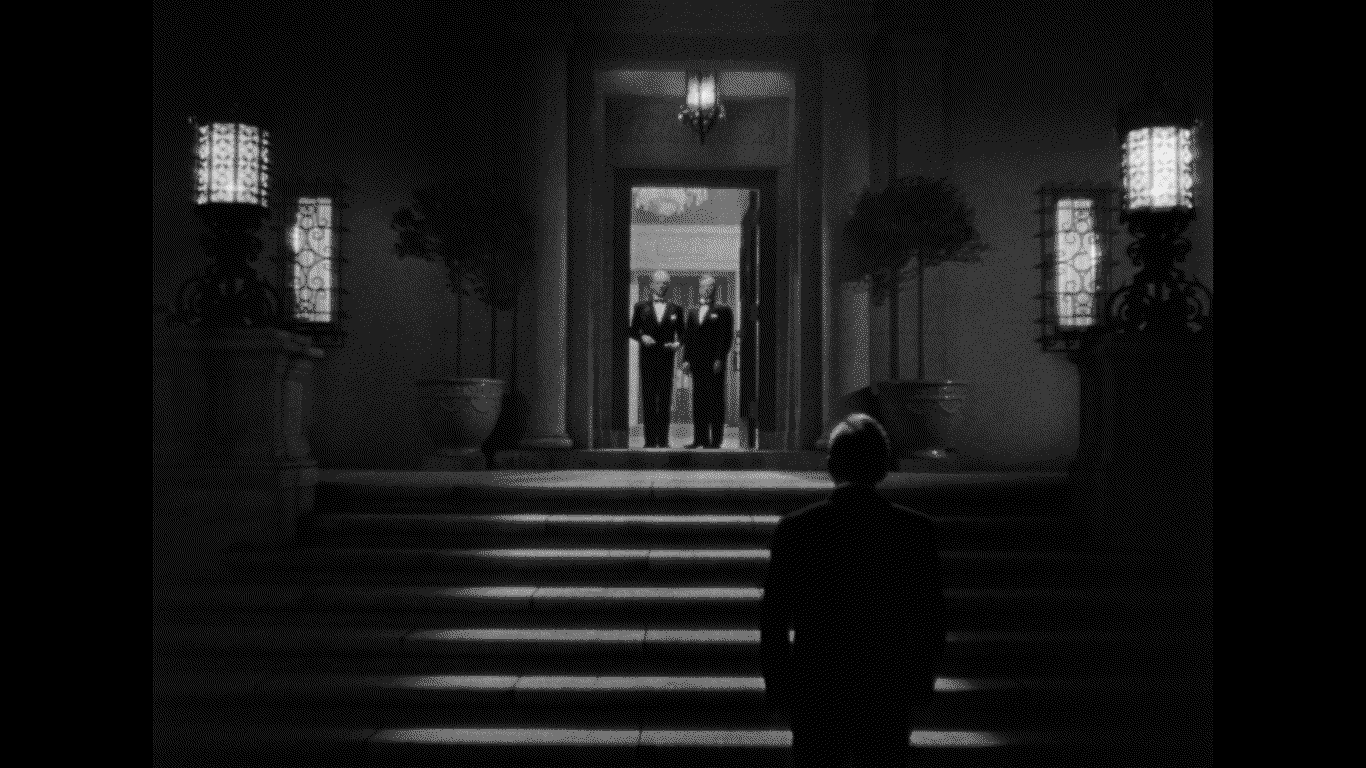
After settling in mind overnight, Notorious seems to me now like bits and pieces of space rock that you encounter in the vacuum of space. Miami. Treason. Alcohol. Secret Agents. Rio de Janeiro. Nazis. Lust. The first thirty minutes or so of the film is like stumbling across a field of asteroids that scrape and crumble against your mind. The result is like collage or collision. And from this mishmash of seemingly unrefined pieces that have come together, a sort of gravity emerges and begins to take ahold of us. The fragments lose their sharp edges as they begin to coalesce into a mass, gaining cohesion and density as our protagonist Alicia goes undercover, sinking deep within a secretive community of German expats in Rio, so obviously out of her depth. At this point, we are wholly captured within Notorious' gravitational field, spinning faster and faster in orbit as secret cellars come into view and keys appear and disappear. A man has been killed, love has been made, all out of view, obscured and contained within a film which leverages the constraints imposed by the Hays Code to shape itself into something dark, heavy, and true, like a spinning mass that has suddenly become so dense that it has no choice but to collapse onto itself. What more could Alicia's epiphany be at that moment in which the poison-induced visions reveal to her the horrible truth we have already anticipated and known? Like witnessing from within a slow motion car crash. Having failed to reach escape velocity, we cross the event horizon into the final ten minutes of the film. The tense escape down the staircase, past the Nazi conspirators, and out the door fails to feel like an escape at all. Instead, we follow Sebastian back up through the illuminated doorway of the mansion in which he will be killed by his associates and the door shuts close behind us.
- Andrea