The Traveler
March was a month of traveling, which may not seem to really distinguish it much from many of the other months in my adult life. But it was a particularly dynamic time. Netherlands became the 30th country I have visited, we revisited some of our favorite corners of Paris and Madrid, and I returned to some of the Spanish cities and towns of my university days: Barcelona, Salamanca, and Ávila. With every new trip I take, I return to some of the same questions I have carried within since childhood, what it means to leave and return, to encounter something new, to visit places across time, with different people, under different conditions.
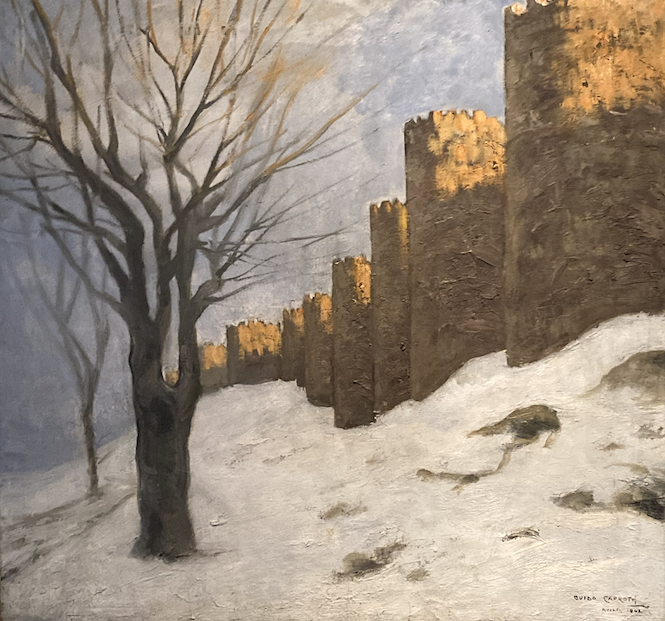
In lieu of some diary-esque retelling of my latest journeys, I want to instead reflect on a surprise encounter I had on the streets of the walled city center of Ávila--a small picturesque place, like a jewel or a pearl incrusted into the vast, rolling highlands of Castilla y León, which I first became enchanted by in 2017, travelling by train on my own.
Turning a corner on the way to visit the birthplace of the Christian mystic and theologian, Santa Teresa de Jesús, my travel party came across a tall and inviting entrance to what turned out to be a Renaissance-era villa. Within the Superunda Palace, we were further surprised to find an art museum, largely dedicated to the work of the 20th century Italian artist, Guido Caprotti.
Why a museum dedicated to an Italian painter in rural Spain? Why in a Renaissance villa? In none of my previous visits to Ávila had I encountered the museum, nor had I ever heard of Caprotti in my studies of art and art history. So, it was without any prior expectations that we entered the museum and let ourselves be swept up in the life and art of Guido Caprotti.
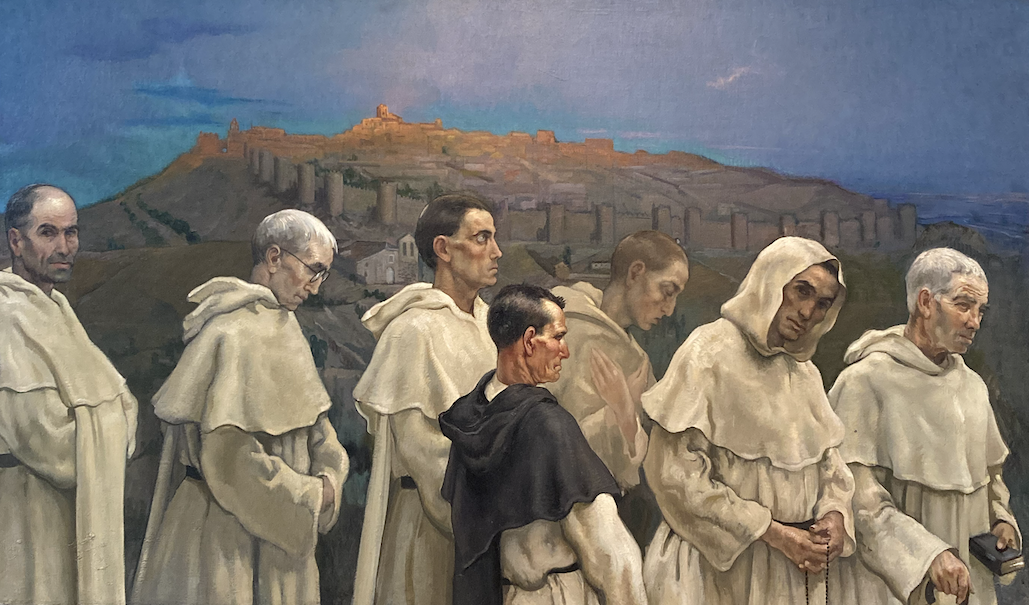
It turns out that Caprotti arrived in Ávila purely by chance when he was a young 29-year-old painter on commission to make a copy of an artwork in the Museo del Prado in Madrid. A snowstorm halted Caprotti's train from Paris and he was forced to stay in Ávila, where he fell under the spell of the ancient walled city hushed under the cover of snow. Enchanted, Caprotti decided to stay and build a new life for himself in Ávila. Initially hosted by the mayor in an old historical building, he eventually married into a prominent family. Caprotti and his wife, miniatures painter Laura de la Torre, were able to then acquire the Superunda Palace that Caprotti helped restore and now houses an extensive collection of his work. From then on, Caprotti's life continued to be full of twists and turns, including exile, war, and travels to México.
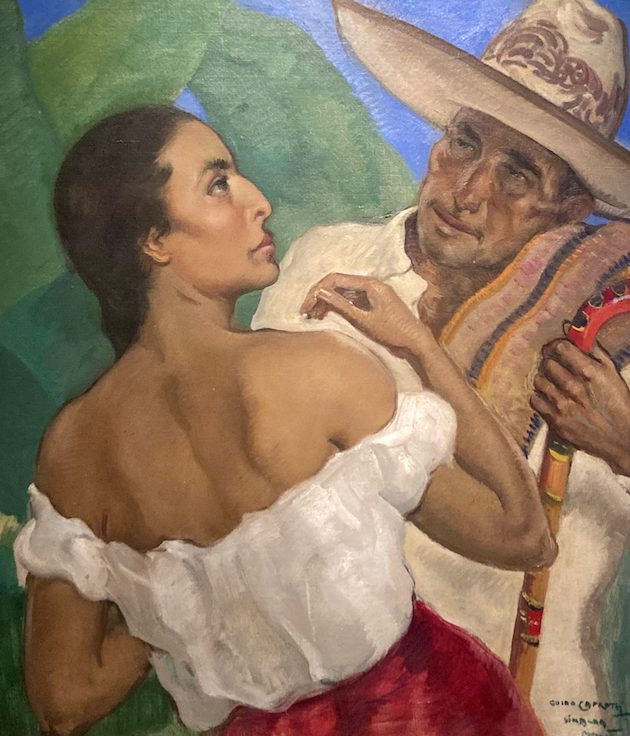
Not only did I really appreciate some of the work on display, as well as some of the antique decor and ceramics, but there is also something about Caprotti's story that really captured my imagination. He had this fresh encounter with the unknown in the middle of a snowstorm, and he embraced it in such a rare, whole-hearted way. In a way that I think contemporary life would condemn as reckless. Today, it feels like there is a collective obsession with exerting control over the trajectory of our lives. Each next step must be carefully and meticulously planned. To do otherwise, is to be irresponsible. We must always be hitting that next professional, educational, emotional milestone. But the most important turning point in Caprotti's life was a bump in the road, not a milestone. In our present day, there is such a rush to completely smooth out any such bumps, particularly with the use of technology. Even small things like choosing where to go out to eat, must be premeditated and vetted via Google Maps or other reservation apps. When we are such in a hurry to single-mindedly reach the next benchmark or destination, we can easily miss those accidents of life that contain, hidden within, true wonder and the possibility for renewal.
- Andrea